• Request Info
  • Visit
  • Apply
  • Give
  • Request Info
  • Visit
  • Apply
  • Give

Search

  • A-Z Index
  • Map

Anthropology

  • About
    • Governance
    • Giving
    • Request More Info
    • Forensic Anthropology Center
  • People
    • Faculty
    • Affiliated Faculty
    • Staff
    • Graduate Students
    • Emeritus
    • In Memoriam
  • Areas of Study
    • Anthropological Archaeology
    • Biological Anthropology
    • Cultural Anthropology
    • Disasters, Displacement, & Human Rights
  • Undergraduate
    • Majors & Minors
    • Advising
    • Careers
    • Departmental Scholarships
    • Undergraduate Anthropology Association
    • Course Descriptions
    • Apply
  • Graduate
    • Degree Programs
    • Apply
    • DDHR Graduate Certificate
    • Graduate Handbook
    • Graduate Forms
    • Awards & Grants
    • Graduate Student Association
  • Opportunities
    • Lab Facilities
    • Field Schools
    • DDHR Working Paper Series
  • News & Events
    • Visiting Lecture Series
    • DDHR Webinar Series
    • Newsletters
    • Share Your News
topography background

News

Author: anthroweb
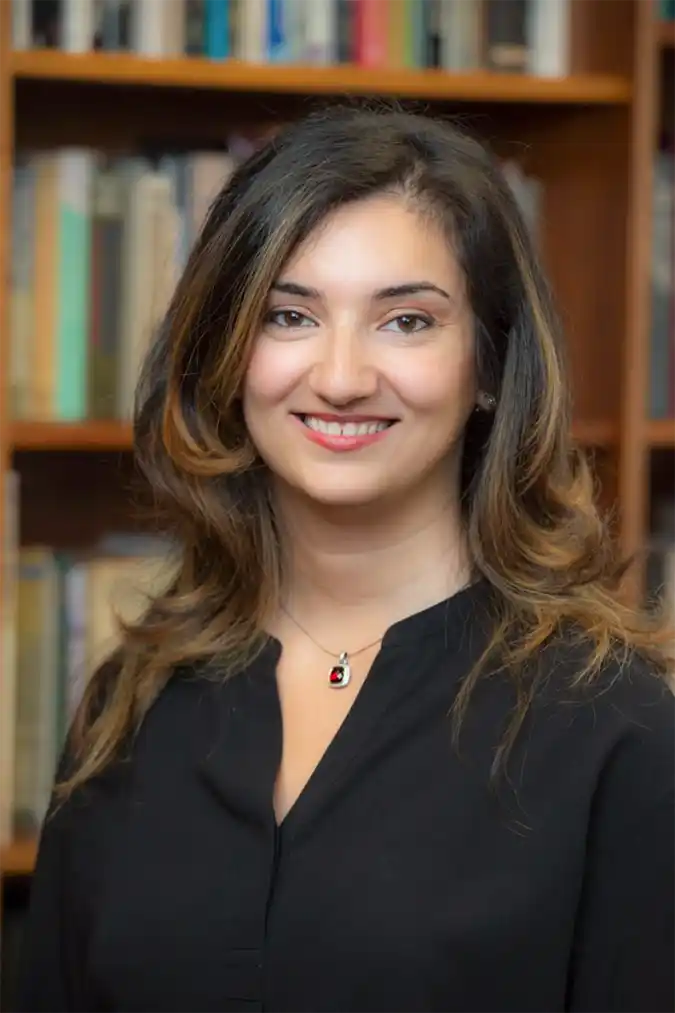
Dr. Narges Bajoghli

DDHR Webinar Series

Dr. Narges Bajoghli

On April 14, 2023, Narges Bajoghli, anthropologist and award-winning author of the book Iran Re-framed: Anxieties of Power in the Islamic Republic, will present “Women, media and ideology in post-revolutionary Iran.” Her talk will be the latest offering in our DDHR webinar series that began two years ago. 

In fall 2022, Alemaheyu Jorgo, Tamar Shirinian and Raja Swamy hosted the Burkinabe-French anthropologist Dominique Somda in a discussion titled “Women, race, identity and memory in contemporary African societies.” She examined the complex legacies of slavery and its memorialization in Madagascar, Benin, and South Africa, as well as the representational politics around the depiction of women’s agency, slavery and colonialism in films, such as The Woman King, and Black Panther. Since 2021, DDHR’s webinars have brought scholars and public intellectuals of international repute to UT. Speakers and participants have included award-winning Tamil film-maker Leena Manimekalai, as well as anthropologists, sociologists, and political scientists such as Nayanika Mookherjee, Balamurli Natrajan, Aparna Sundar, Zhandarka Kurti, Asli Zengin, Ather Zia, Frances Hasso, Michelle Brown, and others. The webinars focus on contemporary social crises impinging upon the physical, social, and economic well-being of populations across the world. The aim of the series is to spur conversation and critical dialogue around specific themes linking the study of disasters, displacement, and human rights to inquiry into social inequalities and structural violence. They also create a space for popular critique and resistance that can shape changing social landscapes across the world. Details and video recordings of webinars are available at https://anthropology.utk.edu/ddhr-webinar-series/. 

Posted: March 30, 2023Filed Under: DDHR-News, News

Swamy Investigates Complex Catastrophic Events in New Book

Raja Swamy

Raja Swamy is currently studying the temporal dimensions of natural and technological hazards on the one hand, and social and physical vulnerability on the other. This research is directed towards his new book tentatively titled A Critical Disaster Studies Manifesto, which aims to provide a comprehensive framework for investigating complex catastrophic events and processes. 

Extending the conceptual limits of the term “disaster” and drawing upon research conducted in Houston and South India, he places everyday life at the center of analysis, by examining how rhythms of the everyday facilitate or impinge upon the capacities of human beings to secure and maintain physical and social well-being, especially when contending with systemic economic, social and political inequalities and injustices. Focusing on the everyday enables a reckoning with the myriad processes that produce catastrophic events, as hazardous threats proliferate in the era of climate change. These threats may include various anthropogenic systems and processes such as extractive capitalism. 

While bringing attention to the insidious undergirding of disaster vulnerability in everyday processes and relations, Raja will also use his book to make a strong case for considering the transformative possibilities of collective social change as beleaguered and marginalized populations sometimes fight back for a better economic and ecological future, especially when catastrophic situations throw into doubt long-held assumptions about the everyday.


Posted: March 30, 2023Filed Under: DDHR-News, News

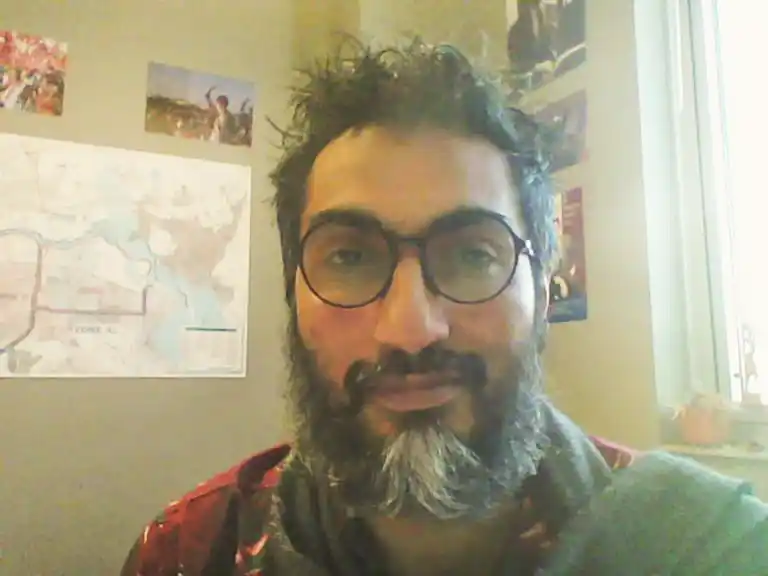
Karmin Alizadeh

Welcoming New Faculty, Staff, and Postdocs

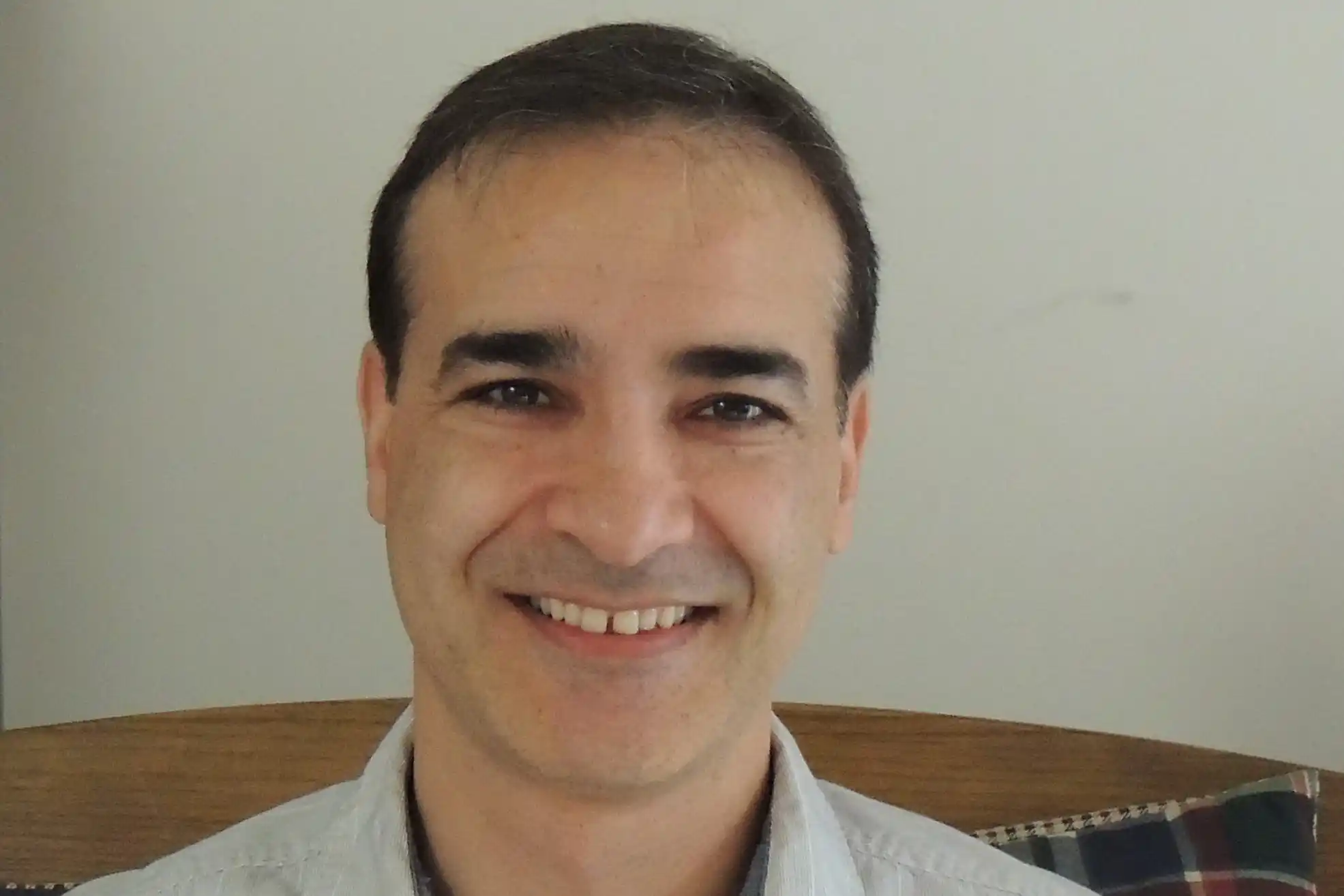
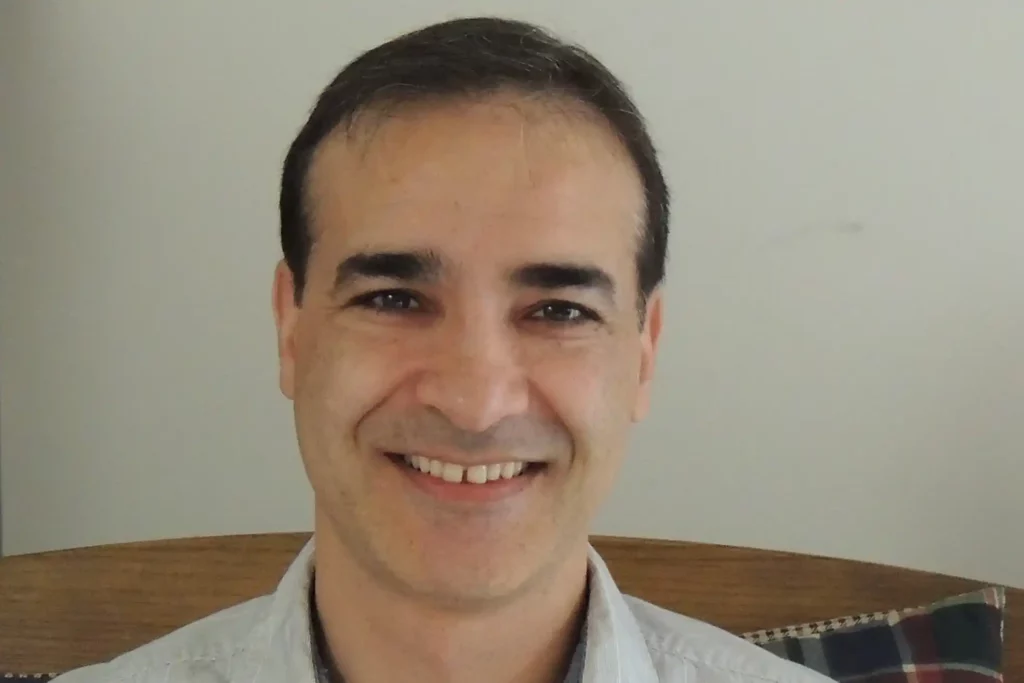
Karim Alizadeh received his PhD in anthropology from Harvard University. He is an anthropological archaeologist who uses excavation and survey, geographic information system methods, and texts as tools for recovering human experiences in the past. He focuses his research on the rise of complex societies in the southwest Asian highlands, particularly the Caucasus; the formation and collapse of ancient empires; the integration of the imperial heartland with dependent provinces; and the effects of imperial rule on both these elements. Karim directed survey and excavations at an Early Bronze Age site, Köhne Shahar, in northwestern Iran (Iranian Azerbaijan). This project investigates the rise of social inequality, craft production and specialization, and the development of social complexity at the site. His academic interests also include landscape archaeology; heritage and nationalism; ethnicity; borderlands/political borders; and forced migration.

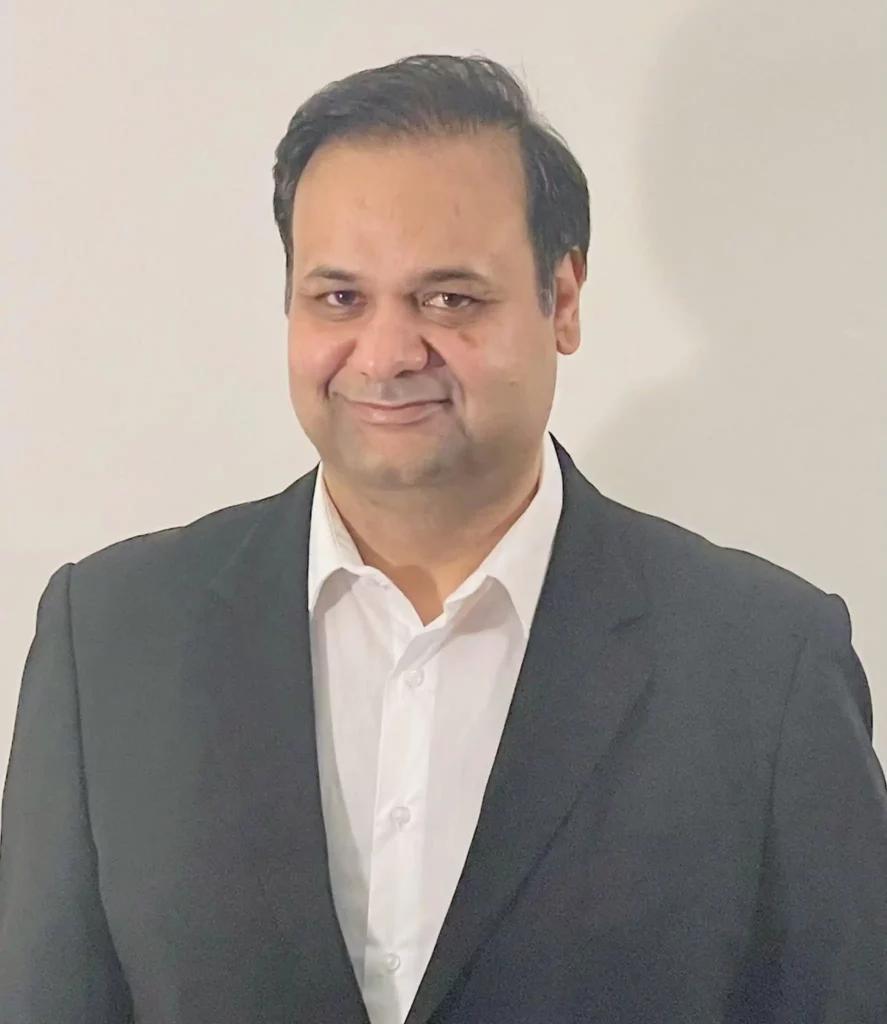
Alemayehu Jorgo is a graduate of Martin Luther University, Halle/Saale, Germany, majoring in sociocultural anthropology. His PhD focuses on understanding the structuration of the Gadaa system (a UNESCO-registered world heritage), an indigenous democratic institution of the Oromo of East Africa. He joined the department in the fall of 2022 as a lecturer in cultural anthropology. Previously he was a lecturer of social anthropology at Addis Ababa University, Ethiopia, and a lecturer of sociology at Jimma University, Ethiopia. Besides teaching, he has a passion for research. He has conducted multi-sited ethnographic fieldwork among a pastoralist society, an agriculturalist society, and a hunter-gatherer society with a population of about a thousand people. His research interests include indigenous institutions, the Ethiopian diaspora, the Gadaa system, indigenous democracy, pastoralism, ethnicity and nationalism, oral history, identity politics, and political and legal anthropology.

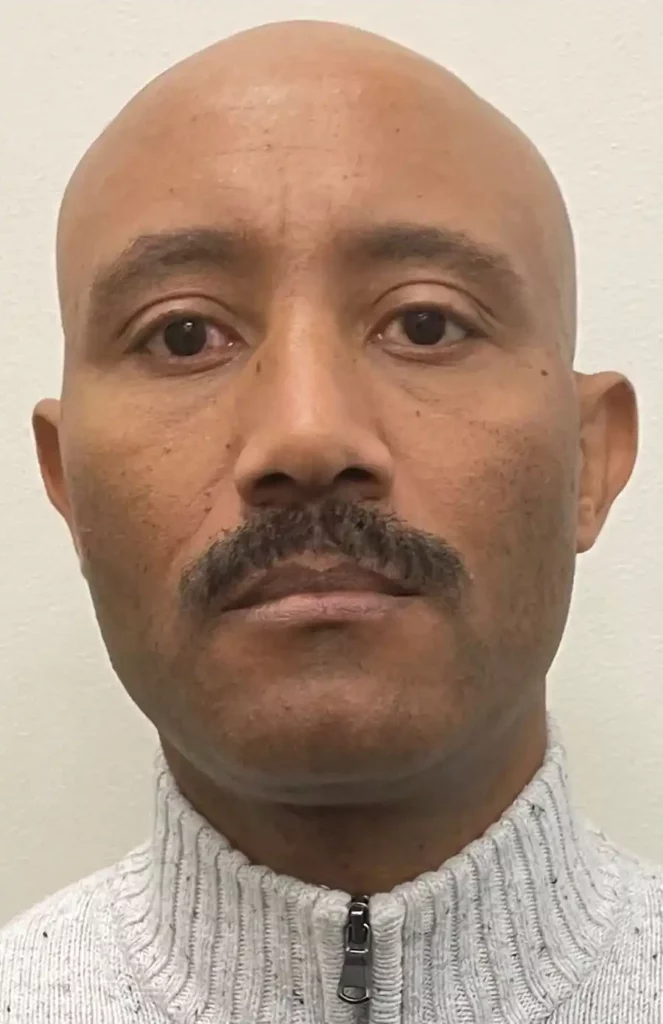
Ehsan Lor Afshar is a cultural anthropologist working on international borders and informal economy. His research explores the impact of economic sanctions on local economies in Baluchistan, southeastern Iran. Ehsan has earned an MA in anthropology at the University of Tehran in 2002 and another at the New School, New York in 2014.  He received a PhD in anthropology from Binghamton University, State University of New York in 2022. In 2017 the Wenner-Gren Foundation awarded him the Wadsworth International Fellowship. The National Science Foundation and the Wenner-Gren Foundation supported his dissertation fieldwork. Ehsan served as a member of the Board of Directors for the Iranian Society of Anthropology. He has authored several peer-reviewed journals in Persian and English and has taught anthropology in Iran and the US. 

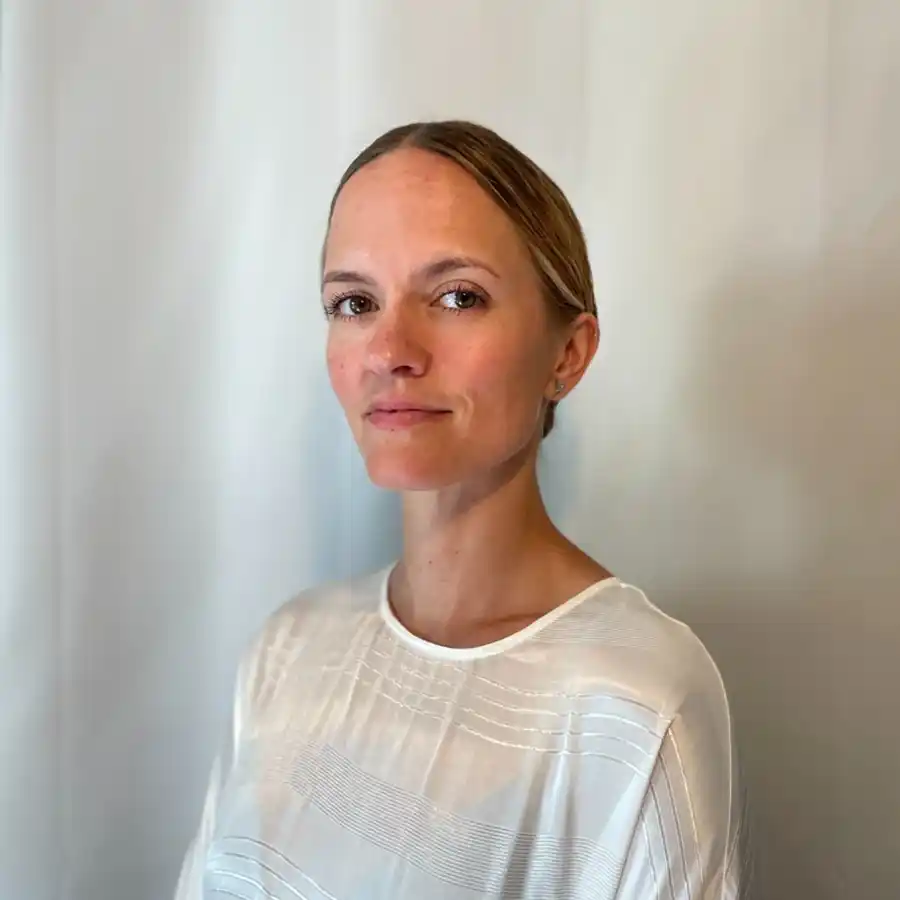
Amanda Williams is a new lecturer in biological anthropology and forensic sciences with the Anthropology department. She received her BA in anthropology and sociology from UT in 2010, and her MA (2013) and PhD (2020) in biological anthropology from the University of Montana. Amanda has an extensive background in cultural resource management, where she has previously served as an osteological consultant for several firms and federal agencies in Nevada and California. Her primary research interests include forensic anthropology, taphonomy, and burned human remains. 

Lucia Elgerud is a UT Graduate School SEC Emerging Scholar’s Postdoctoral Fellow in the Department of Anthropology. She received her PhD from the UT Department of Anthropology in 2022 with a specialization in biological anthropology. She is engaged in casework and research through the Forensic Anthropology Center and teaches in the department. Lucia uses a community-engaged approach in forensic anthropology within a human rights framework. She has worked with mass grave exhumations in Somaliland in the horn of Africa, and in her dissertation research she engaged with families of the dead through ethnographic methods. Her research focused on understanding family needs as related to the recovery of those who were killed during the 1980s Siad Barre regime. 

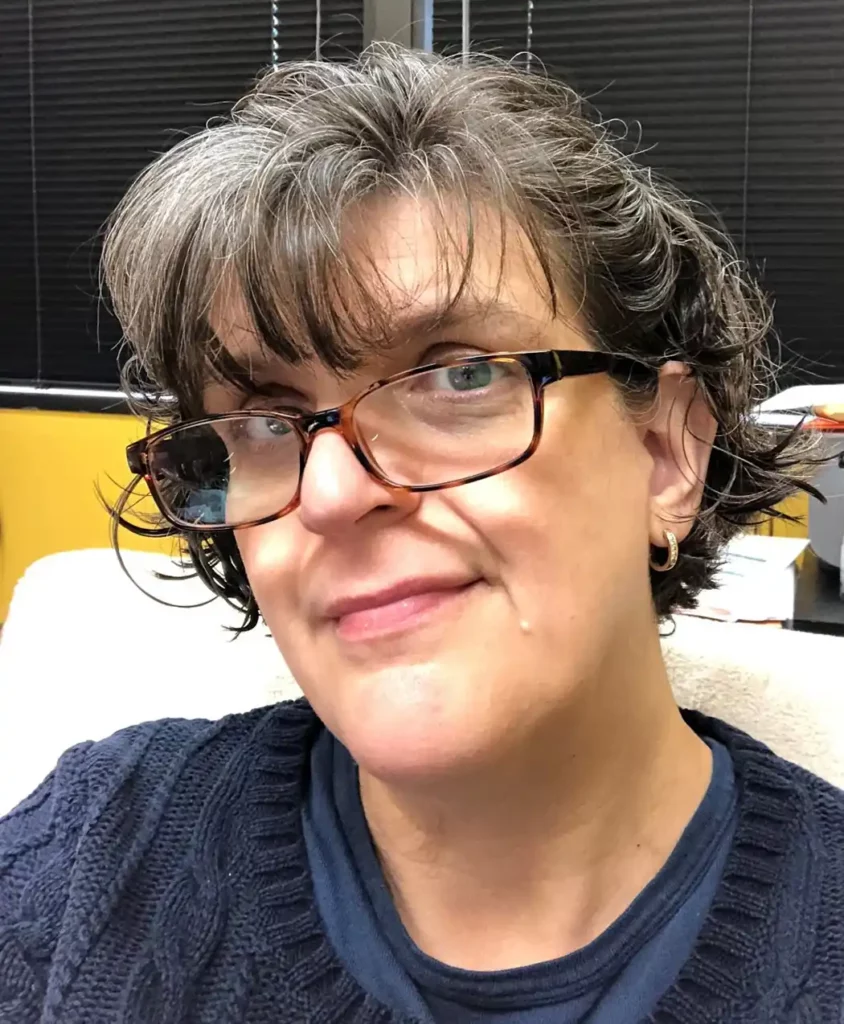
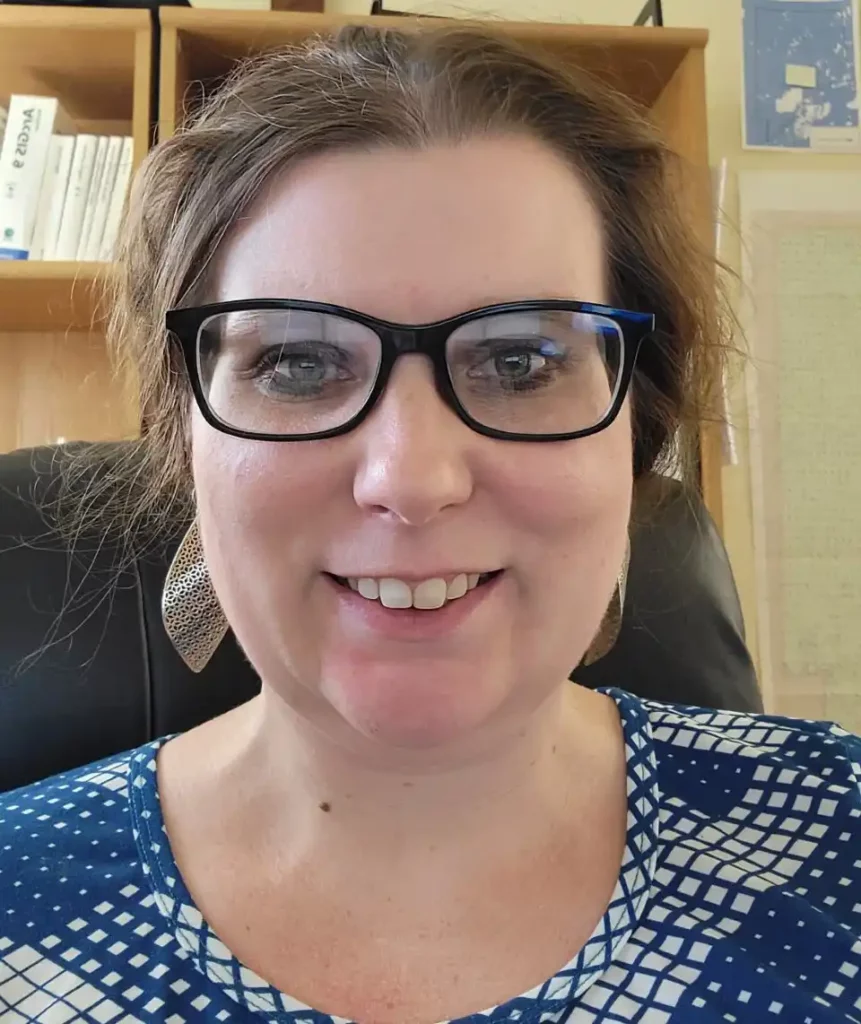
Terrie Yeatts is an accounting coordinator in the Department of Anthropology, where she assists faculty and graduate students with grant development and submissions. She has worked for UT for more than 20 years. Before transferring to anthropology in August 2022, she held an administrative coordinator position in Genome Science & Technology (GST) responsible for the department’s finances as well as the academics. Terrie is a native of Knoxville and earned her BFA at UT in 2006. In her leisure time, she loves to paint and enjoys traveling, knitting and spending time with family. 

Karmin Alizadeh
Karmin Alizadeh
Alemayehu Jorgo
Alemayehu Jorgo
Ehsan Lor Afshar
Ehsan Lor Afshar
Lucia Elgerud
Lucia Elgerud
Terrie Yeatts
Terrie Yeatts
Amanda Williams
Amanda Williams


Posted: March 30, 2023Filed Under: News

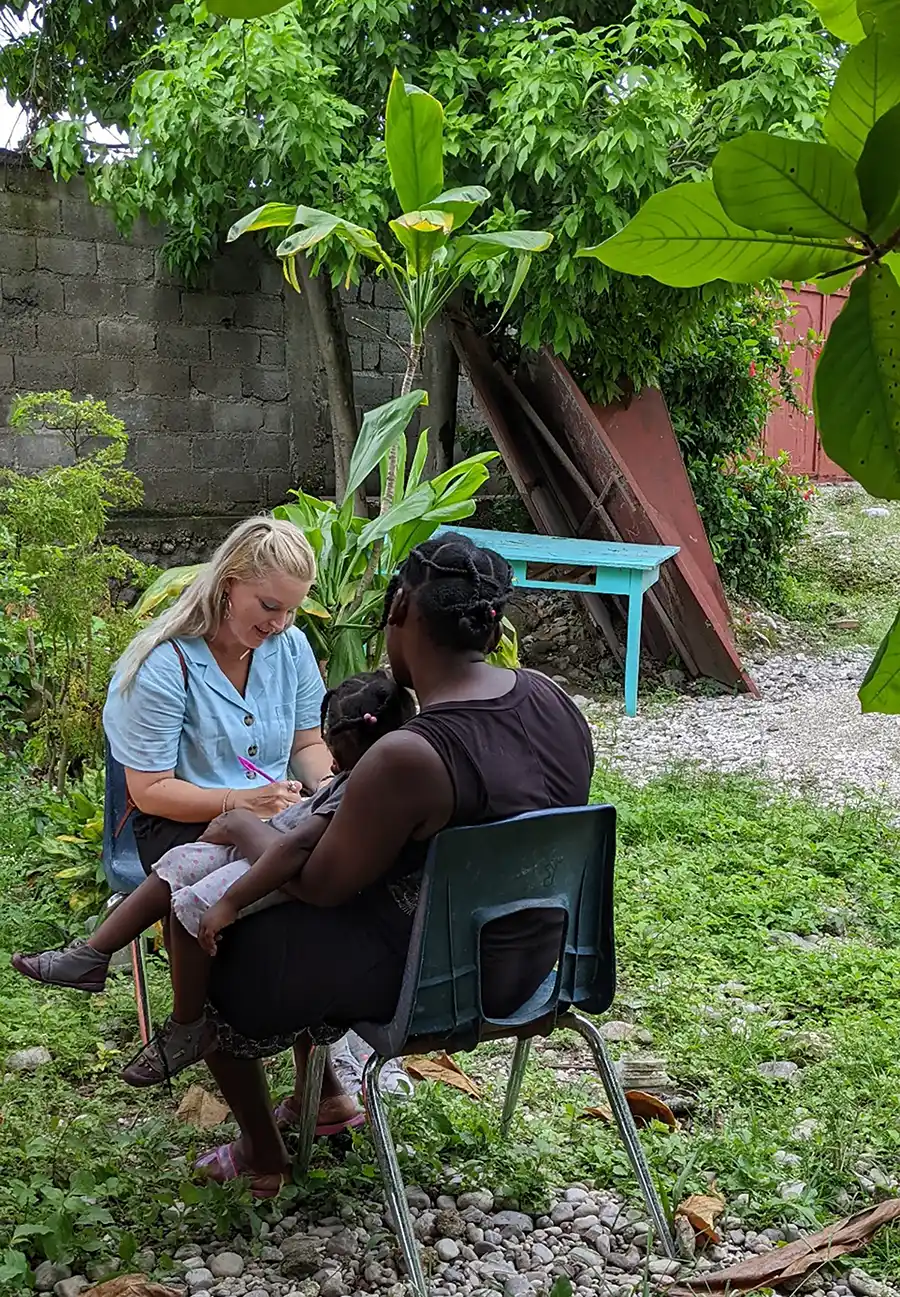
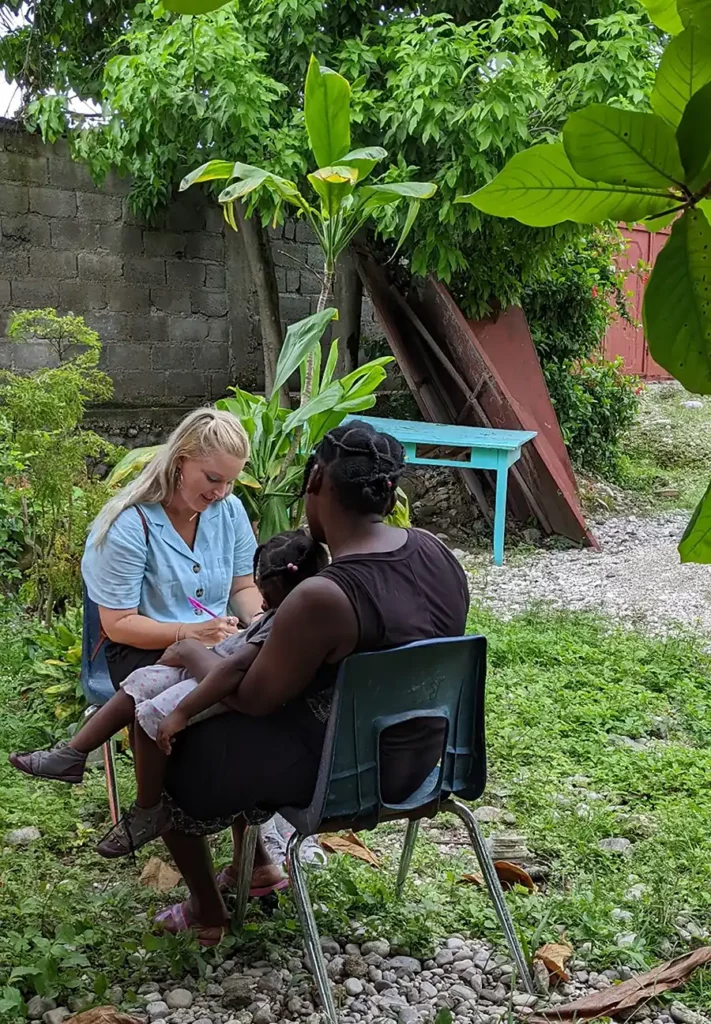
Graduate student Mac Archer conducts an interview.

From the Field

Graduate student Mac Archer conducts an interview
Mac Archer in Les Cayes, Haiti

This past year, cultural anthropology doctoral candidate Mac Archer has been busy conducting research alongside the Haitian social welfare department, IBESR, and the child protection organization, LFBS. 

Mac’s research focuses on the importance of emotional labor in orphanages where destitute children are cared for by nannies drawn from poor communities, sometimes the very communities that these children hail from. In her research Mac centers the complicated racial, class, and gender dynamics at play within Haiti’s orphanage system, where the major players running orphanages tend to be US-based, faith-based organizations. 

“Over the past year I have connected with some amazing people, heard both heartbreaking and inspiring testimonies from various members of these organizations,” Mac said. 

She has also worked as a monitoring and evaluation specialist for the Kellogg Foundation-funded organization, Hope for Haiti, conducting research in schools located in remote areas of the island. With a research regimen that can be physically and emotionally daunting, Mac has found her expertise as a yoga teacher helpful as an avenue to help recuperate while also serving the small expatriate community in Les Cayes. 

“I have also been grateful to teach yoga twice a week to a community of expats in Les Cayes since March,” she said. “This past year has been a wonderful experience and adventure.” 

Ethnographic fieldwork can be immensely challenging, but nevertheless rewarding academically and as a life-experience.


Posted: March 30, 2023Filed Under: Cultural News, News

Axel Huichapa

Undergraduate Student Academic Excellence and Research Stars

Last April, the department recognized the achievements of outstanding undergraduates. 

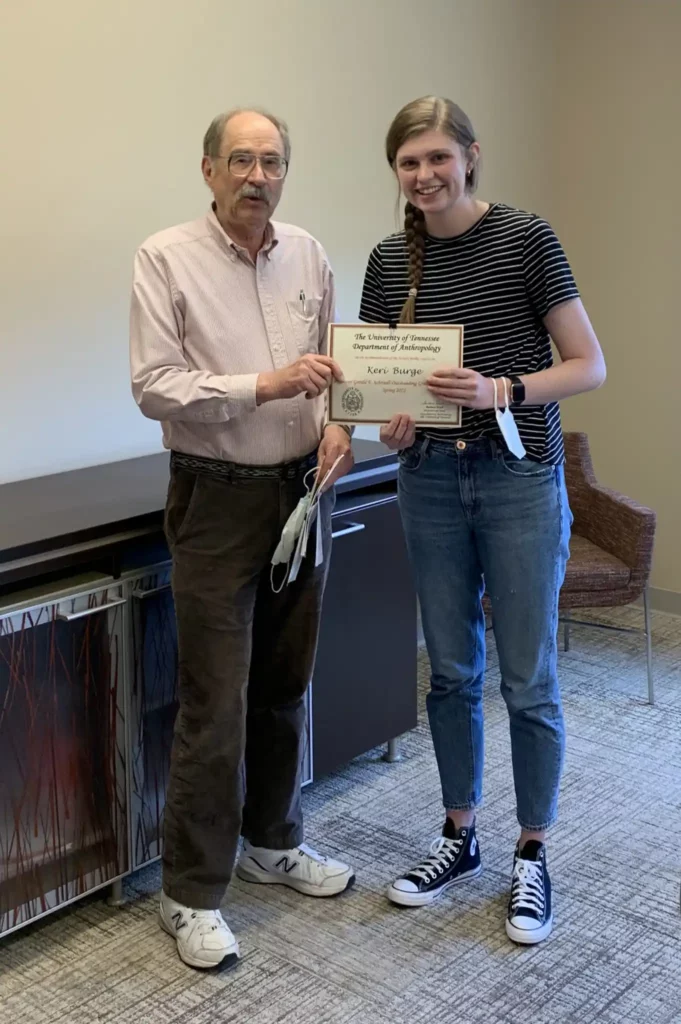
Keri Burge received the Professor Gerald F. Schroedl Award for Outstanding Graduating Senior and was recognized by the College of Arts and Sciences as the Outstanding Graduating Senior in Anthropology.  

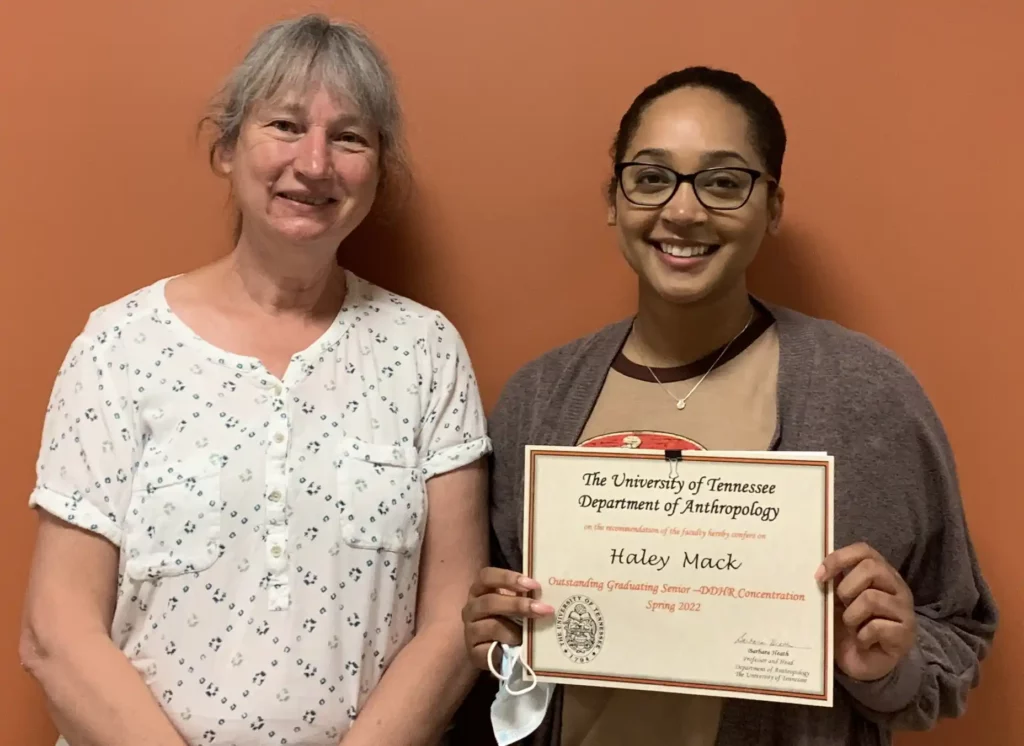
The college also recognized Lydia Lindsay and Navit Nachmias as Outstanding Graduating Seniors in the Forensic Concentration and Haley Mack as Outstanding Graduating Senior in the DDHR Concentration. 

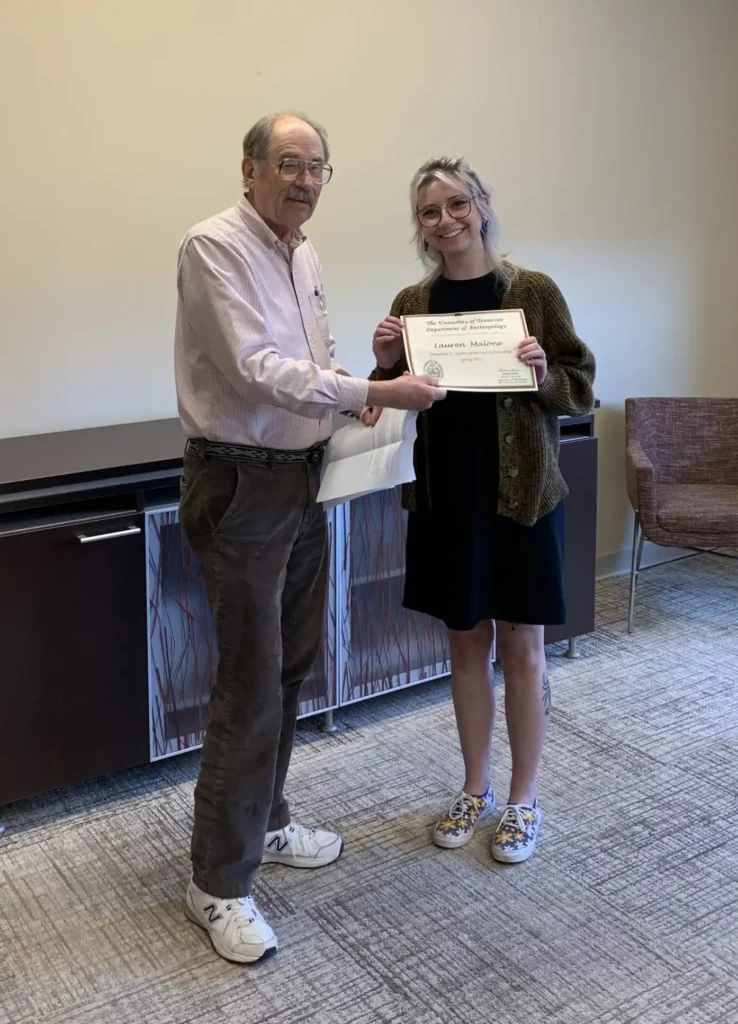
Lauren Malone was the 2022 recipient of the Jonathan C. Spear Memorial Scholarship, and Maddison Wright received the Sandy Jeffers Memorial Scholarship. 

Three undergraduates from the department participated in the spring 2022 Exhibition of Undergraduate Research and Creative Achievement (EURēCA), the university’s annual event showcasing research and creative activities by undergraduates working with faculty mentors. 

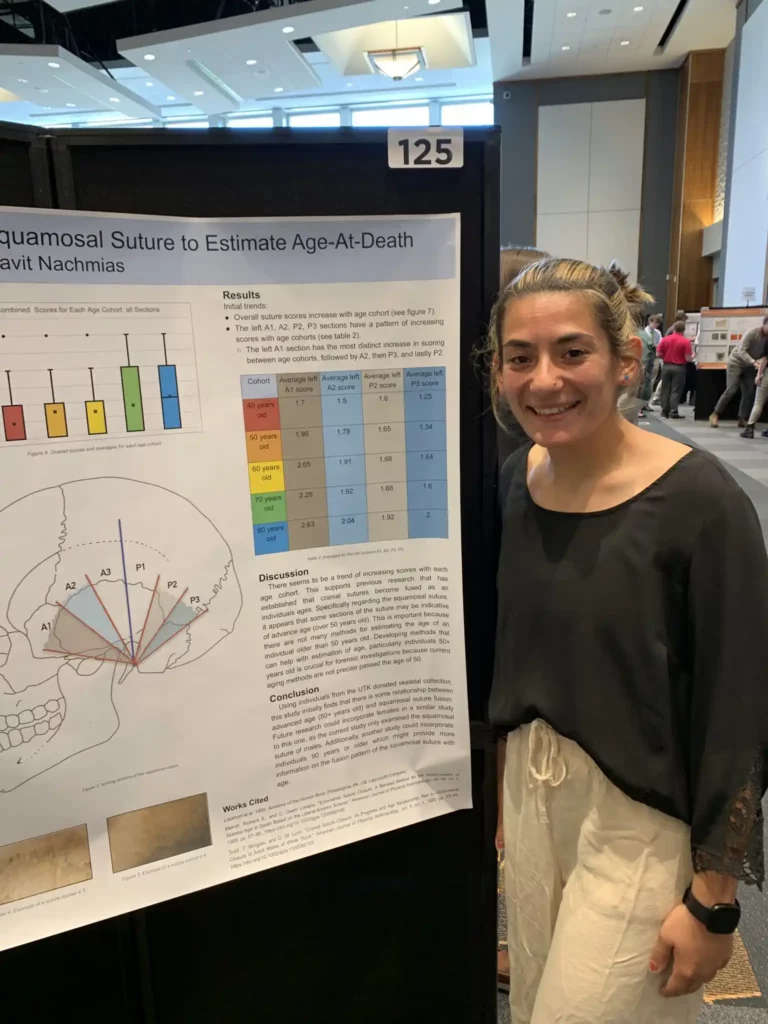
Navit Nachmias, mentored by Joanne Devlin, presented her research “Investigation of the Ectocranial Squamosal Suture to Estimate Age-at-Death.” 

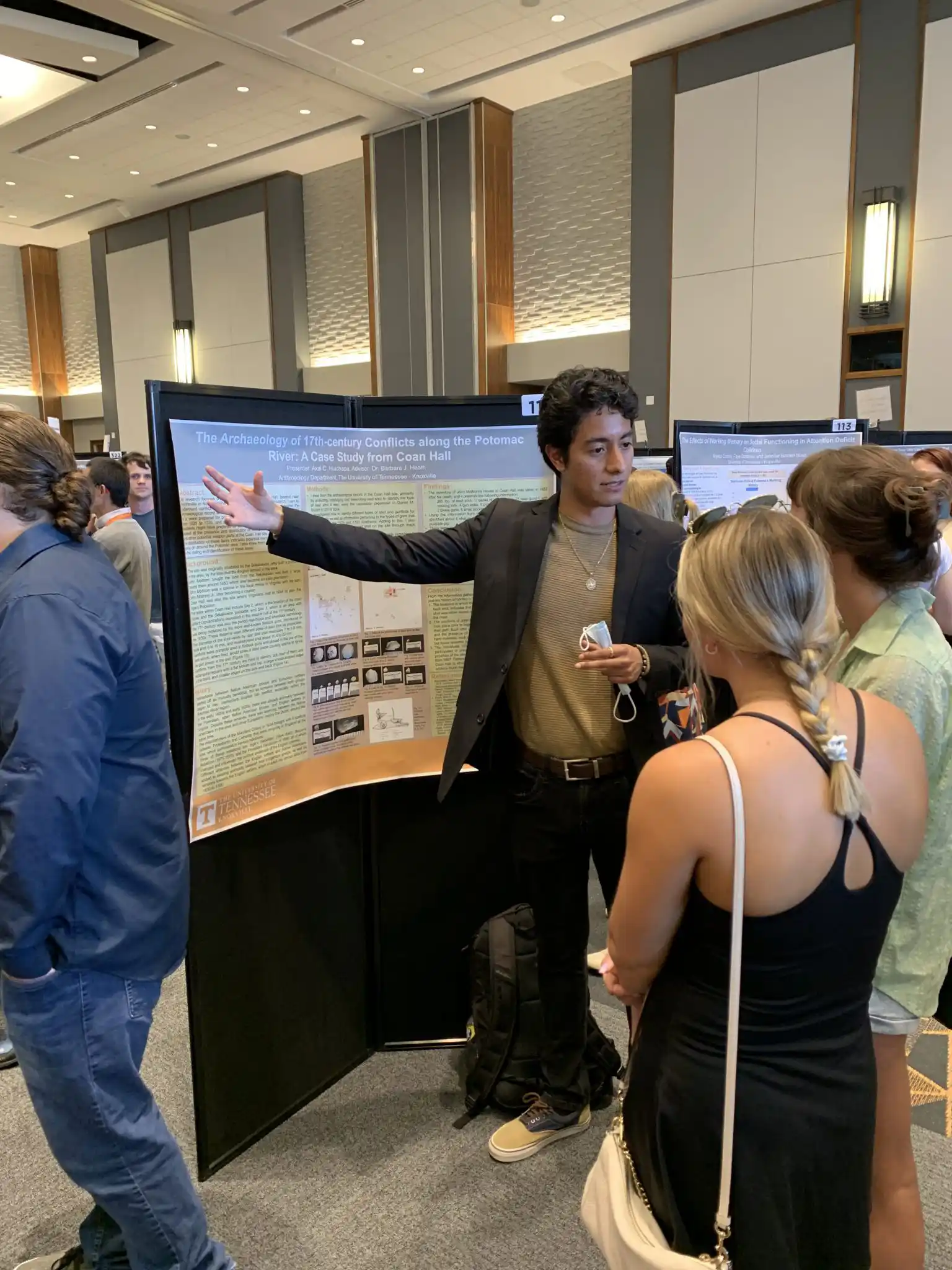
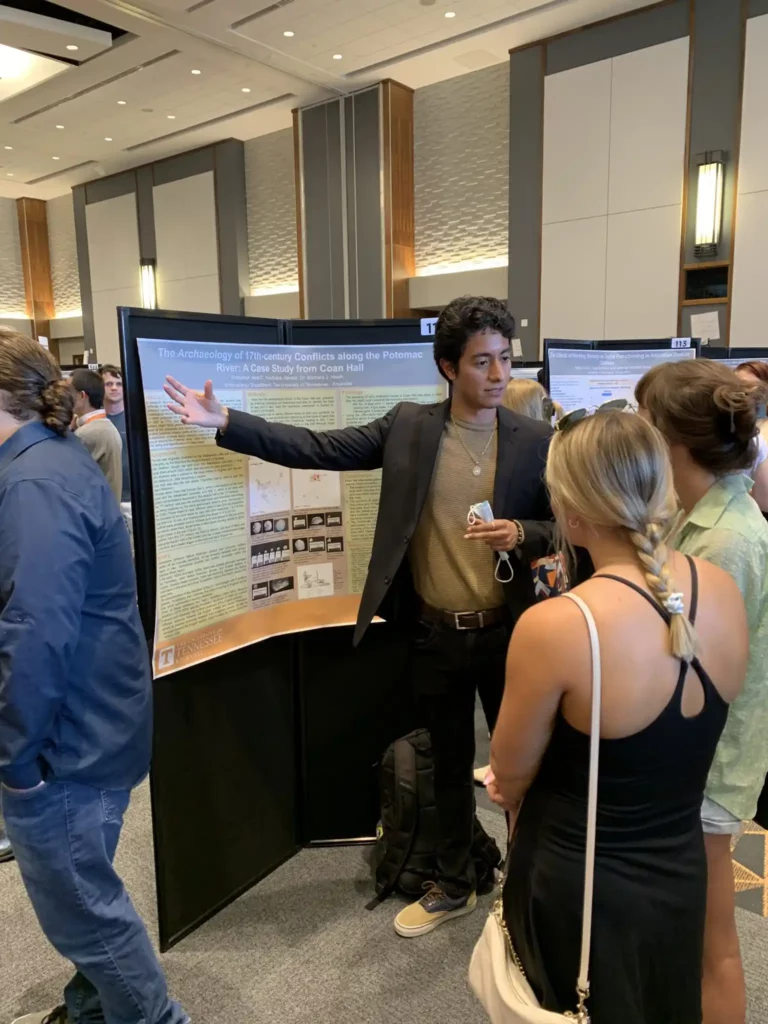
Axel Huichapa, mentored by Barbara Heath, presented “The Archaeology of 17th-century Conflicts along the Potomac River: A Case Study from Coan Hall.” 

Keri Burge, mentored by Anneke Janzen, presented “Exploring Early Colonial Animal Management Practices in Virginia: A View from Coan Hall,” for which she won an Award of Excellence in the Division of Social Sciences.

Axel Huichapa
Axel Huichapa
Navit Nachmias
Navit Nachmias
Lauren Malone
Lauren Malone
Hayley Mack
Hayley Mack
Keri Burge
Keri Burge


Posted: March 30, 2023Filed Under: News

Taylor Bowden at McClung Museum

From the Carrels

Taylor Bowden at McClung Museum

The Anthropology Graduate Student Association (AGSA) has been hard at work expanding existing initiatives and developing new opportunities for scholarship, professional development, and academic collaboration among the graduate students in the department. 

In conjunction with the Undergraduate Anthropology Association (UAA), we continue to support the departmental food pantry, which offers a variety of staple food items, household supplies, and toiletry products for all members of the department free of charge. The food pantry has been a great source of community building within the department while also improving the quality of life for many of our students at both the undergraduate and graduate levels. 

This spring we plan to continue our annual Professional Development Series which allows graduate students to hear from panels of faculty and staff about topics such as CV building, syllabus development, job documents, and how to navigate the job markets in academia and beyond. 

New initiatives for this school year have included developing our relationship with the UAA to give graduate students opportunities for mentorship while providing undergraduates with information about research experiences, academic trajectories, and professional development. 

In fall 2022, AGSA and UAA co-hosted an informational session for department undergraduates where a panel of graduate students shared their paths from undergraduate to graduate study and answered questions from undergraduates about many topics related to both undergraduate and graduate study. The event was very well attended and we are planning to host more collaborative events later this spring. 

Caroline Znachko and Kelly Santana, AGSA’s representatives to the department’s Diversity, Equity, and Inclusion committee (DEI), have also focused on improving the relationship between graduate and undergraduate students. They are working with DEI committee members to create an online repository of diversity statements and land acknowledgements for students and faculty to use as we make our course planning and preparation more inclusive to all students.

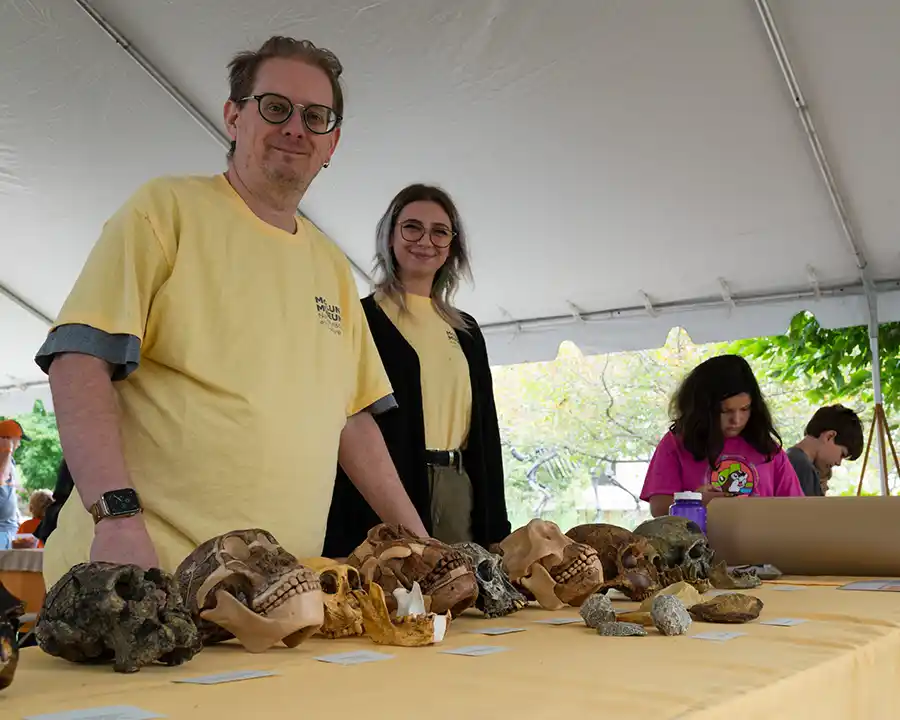
Graduate students have also been active in outreach to the campus and Knoxville communities, including the annual “Can You Dig It?” and Darwin Day events at the McClung Museum. 

We are excited to continue these initiatives and look forward to continuing to help improve the lives of graduate students in the department throughout the spring semester!

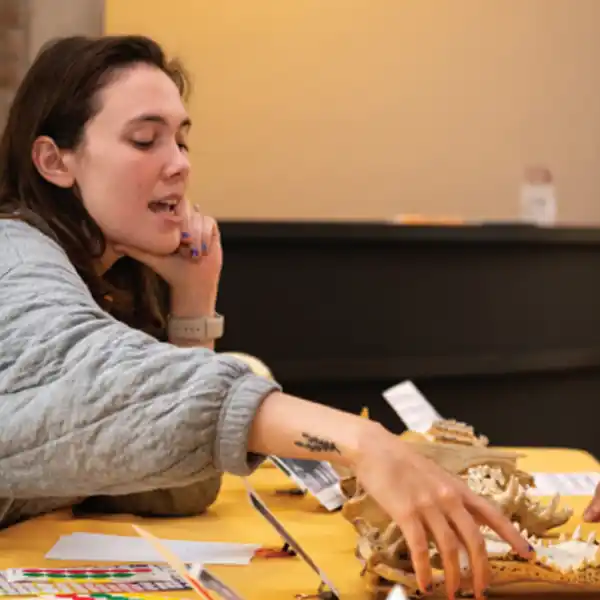
Steven Lautzenheiser and Lauren Malone at McClung on Can You Dig it Day. Photos provided by McClung Museum and captured by Grayson Martin Media.


Posted: March 30, 2023Filed Under: News

Barbara Heath

Season of Changes

Message from the Department Head 

Barbara Heath

It has been another busy, productive, and successful year in the department. I’m excited to share with you in this issue of Anthropos the stories of my colleagues and highlight the experiences of some of the wonderful students who make the department such a great place to do and teach anthropology. 

This academic year kicked off with the first faculty retreat we’ve had in nearly 20 years. We spent a day together in the beautiful setting of the University of Tennessee Arboretum discussing how university changes in budgeting, enrollment, and organization will affect the department and how best to respond and plan for them. We also strategized about future growth and curricular changes. Most importantly, the retreat was a chance to engage with each other, brainstorm, and share experiences in a setting outside of the daily demands of life in Strong Hall. I hope to make retreats a part of our annual cycle going forward. 

Our program continues to thrive, with another year of increasing undergraduate enrollment. Because the interests and needs of our students and the department continue to change, we have been busy adjusting our curriculum and welcoming new colleagues. 

Last May, Micah Swimmer of the Eastern Band of Cherokee Indians led the university’s first-ever course that centered Cherokee language instruction within a broader discussion of contemporary Cherokee culture. The course, housed in anthropology, included students from across the university and was a great success. We will offer it again this year as part of May mini-term. We also put into place a new undergraduate concentration in archaeology, which will start in the fall. The concentration provides a more structured pathway for students interested in focusing their studies on archaeology and will include requirements for field and laboratory work in addition to coursework in archaeological method and theory. We’re also working to build partnerships with local archaeological firms to provide our students with internship and employment opportunities. 

In August we welcomed biological anthropologist Steven Lautzenheiser to the department as a new tenure-line faculty member. Steven specializes in biomechanics of the foot and ankle in modern humans and teaches courses in human anatomy, paleontology, evolutionary biology, and primate evolution.

Four new lecturers – Karim Alizadeh, Alemayehu Jorgo, Ehsan Lor Afshar, and Amanda Williams – have also joined the faculty this year. Their courses are providing our students with opportunities to learn about new areas of scholarship, including anthropological perspectives on money, pastoralism in East Africa, ancient borderlands in Iran, and the treatment of the dead.

I am happy to announce that Raja Swamy earned tenure and promotion to associate professor, and Ben Auerbach was promoted to professor. We are pleased to welcome Terrie Yeatts to the department as our new accounting coordinator, and Sarah Taylor from the College of Arts and Sciences as our new undergraduate academic advisor. 

We have begun collaborations with the McClung Museum’s new environmental archaeologist Alison Damick, and with Zachary Garrett, the new NAGPRA coordinator, in the Office of the Provost. 

We are also at a time of transitions. In the spring, faculty gathered for a farewell dinner to celebrate the career of Distinguished Professor of Science Jan Simek, who retired after 38 years at the university. An expert in the archaeology of Paleolithic Europe and cave archaeology, most recently in the Southeast, he served as department head from 1992 to 2000 and again from 2014 to 2017. He also was chancellor of the university from 2008 to 2009 and president from 2009 to 2010. Jan continues his affiliation with the department as professor emeritus.

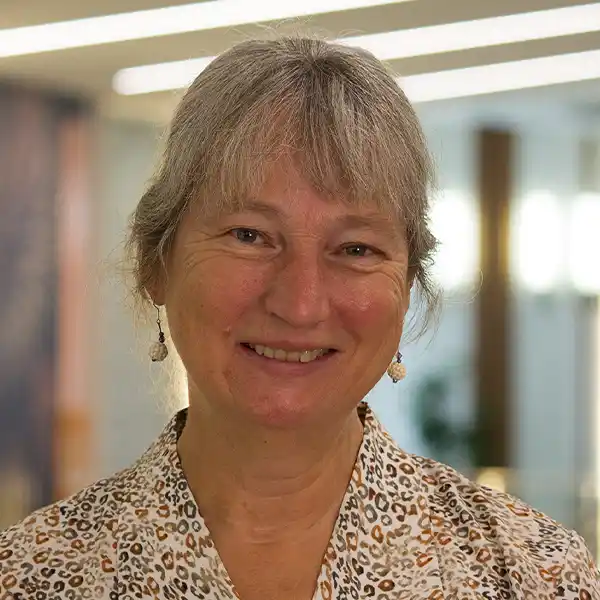
Lee Meadows Jantz, associate director of the Forensic Anthropology Center and distinguished lecturer, plans to retire from teaching at the end of the spring semester. Lee joined the department in 2000 and is an expert in skeletal biology, forensic anthropology, and human growth and development. She is responsible for the body donation program and curates the William M. Bass Donated and Forensic skeletal collections. 

After a nearly 22-year career at the university, Professor David Anderson, a leading scholar of southeastern archaeology, former associate head, and current director of graduate studies, will retire in July. Staff member Kathy Berry will retire next month after five years with the department, during which time she has been the public face of the department for students in Strong Hall. We are grateful for all of their contributions over the years and wish them all the best. 

I hope you enjoy this issue of the newsletter. Please reach out if you’d like to learn more about the department or share your memories and ideas with us. 

-Barbara Heath
Professor and Head


Posted: March 30, 2023Filed Under: Archaeological News, Biological News, Cultural News, DDHR-News, News

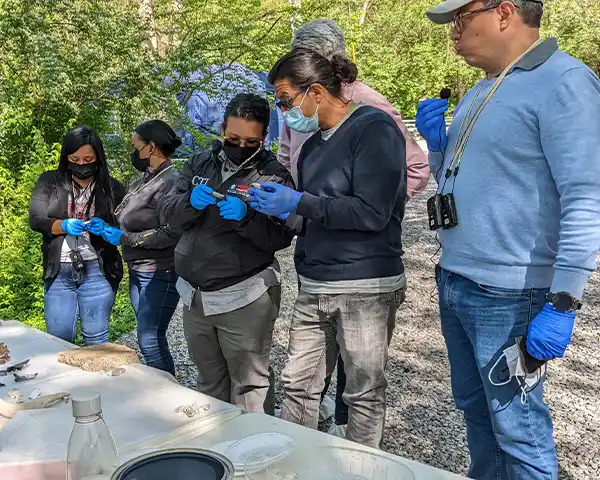
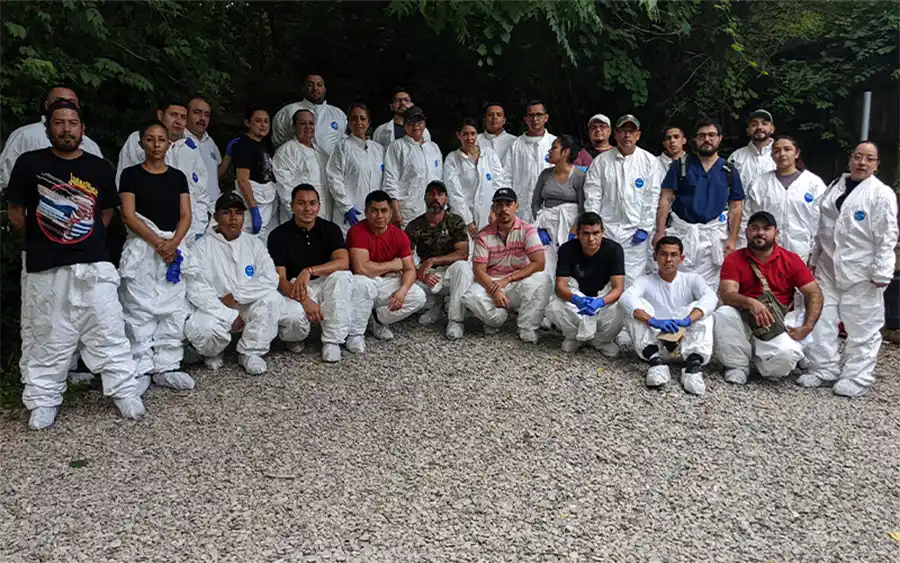
FAC Short Course participants look at findings

News from the Forensic Anthropology Center

FAC Short Course participants look at findings

Charity Owings received two faculty research assistant funding awards to mentor undergraduate Jack Orebaugh in his novel research studying blow flies at the Anthropology Research Facility using transmission electron microscopy. Jack also served as a research assistant during the summer assisting with the collection of entomology samples and decomposition descriptions of four donors. 

FAC Faculty Research

Giovanna Vidoli is a co-principal investigator with Zach Burcham from microbiology on a National Institute of Justice funded grant, “Expanding and validating microbiome database for estimating the postmortem interval” awarded to Colorado State University. 

Dawnie Steadman is a co-principal investingator with Audris Mockus (Min H. Kao Department of Electrical Engineering and Computer Science) and Jennifer DeBruyn (Department of Biosystems Engineering and Soils Sciences) on a grant “Deep Learning Methods for Postmortem Interval Estimation” funded by the National Institute of Justice. Dawnie is also collaborating with Shawn Campagna from chemistry on another grant funded by the National Institute of Justice, titled “Application of Analytical Chemistry to Test the Accuracy of Human Residual Odor Detection by Cadaver Dogs.” 

Mary Davis and Giovanna Vidoli were co-principal investigators on a project in St. John, US Virgin Islands, in collaboration with UT Chattanooga’s Jeffrey L. Brown Institute of Archaeology. They assisted in the partial excavation and relocation of a historic cemetery impacted by underground utility work which will improve the island’s infrastructure resiliency during future hurricanes. This project was the first archaeological investigation carried out in the Cruz Bay Historic District. 

Undergraduate Research

Three UT Office of Undergraduate Research and Fellowships department research assistants were awarded to Joanne Devlin, Giovanna Vidoli, Mary Davis, and Lee Jantz. Undergraduates Luke Massongill and Tessa Carter researched the accuracy of estimating sex from burned remains. Sara Anderson researched the correlation between the size of joint surfaces of weight-bearing joints and body size.

They all presented their research at UT’s Discovery Day and Luke and Tessa also presented at the Mountain, Swamp, and Beach Conference at Middle Tennessee State University. 

Honoree

Lee Jantz
Lee Meadows Jantz

Giovanna Vidoli organized a session in honor of Lee Meadows Jantz at the Mountain, Swamp, and Beach Conference held at Middle Tennessee State University in November. Distinguished Lecturer Joanne Devlin and Professor Emeritus Richard Jantz, along with graduate students Sara Fatula, Sarah Schwing, Kathleen Hauther, Helen Martin, and Marta Paulson presented papers celebrating Lee’s career and her impact on the field of forensic anthropology.  

Short Courses

The FAC annually hosts a variety of courses for law enforcement officers, forensic professionals, and students in forensic programs at other universities around the globe. 

This year, we welcomed 228 course participants to UT for training in techniques ranging from the recovery of human remains to the identification of non-human bones. Participants came from two international groups (Colombia and Mexico) and four different universities (DuPage, Lewis, Valparaiso, and Utah Valley). 

One highlight was a partnership with the International Criminal Investigative Training Assistance Program, for which the FAC hosted 15 forensic anthropologists from Colombia for a two-week course. The anthropologists engaged in a great exchange of ideas and discussions about the different challenges experienced in Colombia and the US.

FAC Short Course Group


Posted: March 30, 2023Filed Under: Biological News, News

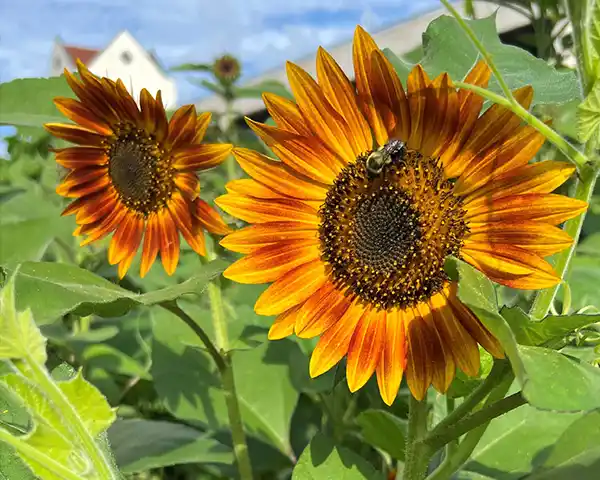
Two sunflowers

Anthropology’s Southern Foodways Garden

Two sunflowers

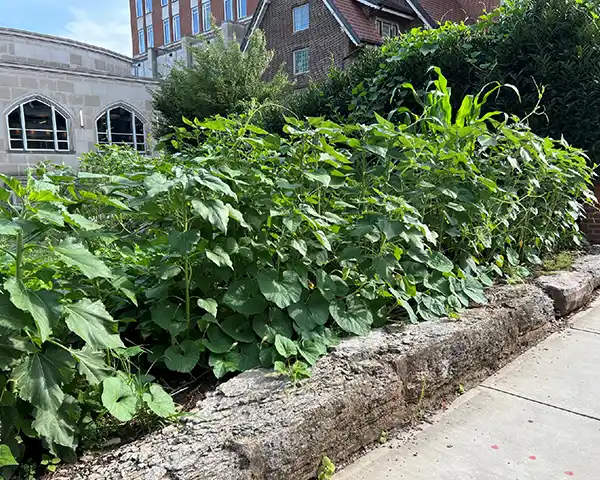
In March 2022, Kandi Hollenbach planted a southern foodways garden in a bed adjacent to the Cottage behind Strong Hall with the assistance of students and faculty members. Kandi teaches about plants and foodways in the classroom, but photos do little justice to the vibrant energy of a living garden.

When we think of southern food, cornbread, grits, barbecue, fried green tomatoes, and fried okra come to mind. We owe these ingredients and techniques to Native Americans and enslaved Africans from the South’s colonial past. During the inaugural season of the garden, Kandi focused on plants associated with both groups.

 Plants cultivated by Native Americans include sunflowers and the familiar “Three Sisters’ Garden” of corn, beans, and squash. She replaced squash with bottle gourd to limit the amount of food produced, since the chemical inputs drifting into the garden are currently unclear. Bottle gourds are the oldest cultivated crop in the Americas, dating to at least 10,000 years ago. Squashes are a close cousin, domesticated around 5,000 years ago by groups living in the Eastern Woodlands of North America. These groups also domesticated sunflowers by 4,200 years ago. Farming peoples in East Tennessee added corn to their food plots about 1,000 years ago, and beans 700 years ago, both of which were passed along routes that connected all the way to Mesoamerica. 

 Other plants in the garden, including okra and black-eyed peas (or cowpeas), highlight crops that enslaved Africans brought with them on their forced journey across the Atlantic. They may have also brought bottle gourds with them—plants that Africans also domesticated at least 4,000 years ago—or they may have been relieved to see bottle gourds growing locally when they arrived in the Americas. Africans and Native Americans used bottle gourds for a wide range of purposes, from containers to fishing floats to musical instruments. 

 Kandi and her assistants planted the garden in complementary groupings rather than orderly rows: the beans and black-eyed peas climbed up the corn stalks and okra and sunflower stems for support. Bottle gourd vines meandered at will, shading the soil to keep in moisture and outcompete weeds for sunlight. After several weeks of regular rain showers, the gourd vines were riotous and took over the whole patch! 

a Southern garden

The gardeners have learned a lot from the garden already – about the timing of plantings, sunlight requirements, responsiveness to rain, attraction of a wide range of wildlife, reduction in weeds over the course of the season as leaves and vines spread, timing of ripened pods, and harvest and drying of seeds and gourds for storage. Students in the spring 2023 paleoethnobotany class will package the seeds, along with information about their cultural uses, and distribute them to 4H groups in East Tennessee.

 The students will also plant maygrass, little barley, and sochan this spring – another set of plants tended by Native Americans in this region beginning about 4,000 years ago – and develop signage for the garden. By May, they will harvest those seeds and plant the next round of crops for the summer. 

 If you find yourself near the corner of Cumberland Avenue and 16th Street, come by and check out what’s growing in our southern foodways garden!

Download PDF


Posted: March 30, 2023Filed Under: Cultural News, News

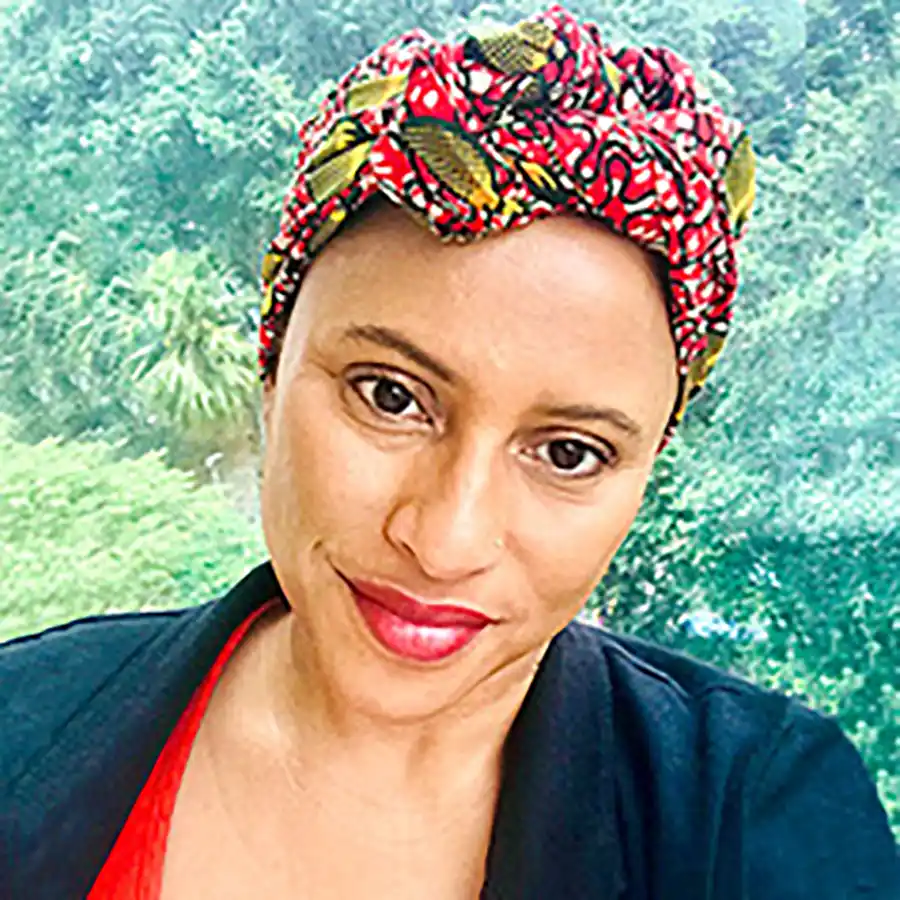
Dominique Somda

Dr. Dominique Somda: Women, race, identity and memory in contemporary African societies

Dr. Somda’s research focuses on the complex legacies of slavery and its memorialization in Madagascar, Benin, and South Africa, especially in the ways in which the latter relates to common assumptions about race and identity, driving the politics of essentialization and ethnicization in contemporary African societies. Dr. Somda also studies the representational politics around the depiction of women’s agency, slavery and colonialism in film, most notably in recent films like The Woman King, and Black Panther. Her ongoing multi-sited ethnographic work continues to shed light on the everyday lives of African women, as they navigate and contend with challenges and possibilities presented by social, economic and political crises and struggles in the present era.

Dr. Dominique Somda is a Research Fellow with the Institute for Humanities in Africa (HUMA) at the University of Cape Town, South Africa. After earning a Ph.D. from the University of Paris Ouest Nanterre, where she was a member of the Laboratoire d’Ethnologie et de Sociologie Comparative, Dr. Somda conducted research and taught at various institutions in Europe, North America, and Africa, including Fondation des Maisons des Sciences de l’Homme in Paris, London School of Economics, University of Pennsylvania, and Reed College. Her work focuses on how inequality − or conversely egalitarianism − emerges through everyday practices, and engages the anthropology of slavery, democracy, Christianity, as well as feminist and postcolonial studies.


Posted: November 10, 2022Filed Under: Cultural News, News

  • « Previous Page
  • 1
  • 2
  • 3
  • 4
  • 5
  • Next Page »

Exploring the human experience.

Careers

Newsletter

Giving

Anthropology

College of Arts and Sciences

502 Strong Hall
1621 Cumberland Avenue
Knoxville, TN 37996-1525
+1 (865) 974-4408
anthropology@utk.edu


Facebook Icon    X Icon    Instagram Icon    YouTube Icon

The University of Tennessee, Knoxville
Knoxville, Tennessee 37996
865-974-1000

The flagship campus of the University of Tennessee System and partner in the Tennessee Transfer Pathway.

ADA Privacy Safety Title IX