• Request Info
  • Visit
  • Apply
  • Give
  • Request Info
  • Visit
  • Apply
  • Give

Search

A-Z Index Map

Anthropology

  • About
  • People
  • Undergraduate
  • Graduate
    • Degree Programs
    • Apply
    • DDHR Graduate Certificate
    • Graduate Handbook
    • Graduate Forms
    • Awards & Scholarships
    • Graduate Student Association
  • Opportunities
  • Visiting Lecture Series
  • Giving
topography background

News

News

Mark Hubbe.

Welcome to our new Department Head!

Mark Hubbe.

Dr. Mark Hubbe joined the University of Tennessee as Head of the Department of Anthropology in 2026, following his tenure at The Ohio State University since 2012 and his role as an adjunct professor at UT since 2019, bringing with him established collaborative ties within the UT research community. His research integrates a strong quantitative and evolutionary framework within broad interdisciplinary collaborations spanning the United States, Brazil, Chile, Mexico, and Germany. His work addresses topics such as the early peopling of South America, cranial morphological evolution in the genus Homo, and patterns of frailty and stress in past populations. More recently, he has focused on critically reevaluating anthropological theory and methods, particularly how lived experience and accumulated stress are interpreted in the past, a direction that informs his National Science Foundation funded project (begun in 2024) examining the use of epigenetic markers to estimate age at death from skeletal remains. Over the past three years, he has also applied quantitative evolutionary methods to study Pleistocene human evolution, while maintaining a highly interdisciplinary research record spanning human biology, archaeology, geology, paleontology, and zoology.

Welcome, Dr. Hubbe!


Posted: July 31, 2026Filed Under: News

Two hands with fingers spread apart.

Why are our fingers different lengths?

Why are our fingers different lengths?

Steven Lautzenheiser, University of Tennessee

Curious Kids is a series for children of all ages. If you have a question you’d like an expert to answer, send it to curiouskidsus@theconversation.com.


Why are our fingers different lengths? – Betty, age 8, California


It was one of those rushed mornings when I was already running late for work. In my hurry to grab my keys and head out the door, I knocked a few things off the counter, scattering loose coins onto the floor.

As I picked up the coins, I noticed I was using different movements to gather everything, and those movements seemed to depend on the different lengths of my fingers. My thumb and index finger pinched together to grab a dime, while my middle finger reached farther to pick up coins that had rolled under the edge of a cabinet. My ring finger and pinky curled inward to hold the coins I had already collected while I reached for more.

These motions really brought home how different fingers have their own job – and how each finger’s varying length plays a big part in what it can do.

Pondering such things is part of my job description: As a biological anthropologist who studies the biomechanics of how people move, I often think about how movement, forces and structure work together to shape the human body.

Team of 5

My morning mishap showed that each of my five fingers seemed to have its own role, and the differences in finger length helped them do different jobs.

The middle finger is usually the longest. It acts as the hand’s central axis, helping to balance and guide movements. Its length also allows it to work with the other fingers to grip objects securely.

The ring finger is typically slightly shorter than the middle finger, but the two work closely together, generating grip strength and stabilizing the hand. Whether lifting a heavy backpack, carrying grocery bags or holding a baseball bat, the middle and ring fingers help keep your grip steady and balanced.

The index finger is shorter, more flexible and can move on its own more easily than the two main gripping fingers – which makes it great for careful, controlled movements. It is the finger you use for tasks that require precision and accuracy, such as pointing, typing, pressing small buttons or writing with a pencil.

The pinky finger is usually the smallest of the five, but it doesn’t need length to do its job of steadying the outer edge of the hand. It helps keep your hand stable when you hold things – especially objects that are bigger than your hand, such as a large water bottle, basketball or a heavy bag of groceries.

The thumb is unique. It’s generally about three-quarters the length of the index finger. Rather than relying on length, the thumb’s special joint lets it rotate and move across the palm, where it can touch the other fingers. Because it can move this way, it is called an opposable thumb. This makes the thumb one of the most versatile parts of the hand, enabling you to pinch and pick up small objects.

Without the thumb, many everyday tasks, such as holding utensils, opening containers and, yes, picking up coins, would be much harder.

An evolving tool

Evolution shaped the human hand into a highly capable tool. Early humans relied on their hands for survival tasks, such as climbing, building, and making and using tools.

Those with hands better suited for gripping and precision were more likely to thrive, gradually shaping the modern human hand.

For example, humans share our long middle finger with other apes, including chimpanzees and gorillas, suggesting that it has been important throughout our evolutionary history. This long history of adaptation explains why our hands are both strong and highly precise, capable of handling everything from heavy lifting to delicate tasks.

A biological blueprint

Evolution is only part of the story. Before birth, genes guide how the hands grow, acting like a biological blueprint during development.

These genes influence how quickly bones lengthen, how long each finger becomes, and how the joints and tendons are shaped. Small differences in how these genes work before birth can change how long each finger grows compared with the others.

Hormones also play an important role. Sex hormones, such as testosterone and estrogen, and other signals can influence how the bones of the fingers grow, shaping subtle differences in proportions before birth and into childhood and adolescence.

Hand development is shaped by both biology and environment. This is why families often share similar hand features, even though each person’s hands and fingers are slightly different.

As we use our hands every day, we become better at tasks such as writing, throwing or playing an instrument. Over time, our hands grow stronger and more coordinated through practice.

So why are our fingers different lengths? There is no single answer. Evolution shaped the hand, with fingers that specialize in different tasks, while genes and hormones guide how those fingers develop.

Together, these forces produced a hand in which each finger has a different size, shape and role, helping us perform everything from powerful grips to delicate movements.


Hello, curious kids! Do you have a question you’d like an expert to answer? Ask an adult to send your question to CuriousKidsUS@theconversation.com. Please tell us your name, age and the city where you live.

And since curiosity has no age limit – adults, let us know what you’re wondering, too. We won’t be able to answer every question, but we will do our best.The Conversation

Steven Lautzenheiser, Assistant Professor of Biological Anthropology, University of Tennessee

This article is republished from The Conversation under a Creative Commons license. Read the original article.


Posted: July 10, 2026Filed Under: Featured, News

Alex Bentley headshot photo

Alex Bentley in ‘The Conversation:’ Will AI accelerate or undermine the way humans have always innovated?

Alex Bentley in ‘The Conversation:’ Will AI accelerate or undermine the way humans have always innovated?

R. Alexander Bentley, University of Tennessee

In graduate school, my experimental archaeology professor told a student to create a door socket – the hole in a door frame that a bolt slides into – in a slab of sandstone by pecking at it with a rounded stone. After a couple of weeks, the student presented his results to the class. “I pecked the sandstone about 10,000 times,” he said, “and then it broke.”

This kind of experience is known as individual learning. It works through trial and error, with lots of each. Also known as reinforcement learning, it is how children, chimpanzees, crows and AI often learn to do something on their own, such as making a simple tool or solving a puzzle.

But individual learning has limits. No matter how much someone experiments through trial and error, improvement eventually hits a ceiling. Humans have been throwing javelins for a few hundred thousand years, yet performance has largely plateaued. At the 2024 Olympics in Paris, the gold medal javelin throw was about 5% shy of Jan Železný’s 1996 record. The level of expert play in the strategy game Go was essentially flat from 1950 to 2016, when artificial intelligence changed the equation.

Throughout humanity’s existence, these limits on individual learning have not applied to technology. Since IBM’s Deep Blue defeated world chess champion Garry Kasparov in 1997, supercomputers have become a million times faster – and now routinely outperform humans in chess and many other domains.

Why is technological improvement so different? My work as an anthropologist on cultural evolution and innovation shows that, unlike individual performance, technology advances through combination and collaboration. As more people and ideas connect, the number of possible combinations grows superlinearly. Technological innovation scales with the number of collaborators.

My new book with anthropologist Michael J. O’Brien, “Collaborators Through Time,” reveals these patterns across human existence. It traces how 2 million years of technological traditions progressed through collaboration among specialists, across generations and with other species.

Expertise has been the key. Because traditional communities know who their experts are, specialization and collaboration have consistently underpinned human success as a species.

I’d summarize our insight into how technology keeps advancing as TECH: tradition, expertise, collaboration and humanity.

Acheulean hand axes are one of the earliest technologies humans developed. Didier Descouens/Wikimedia Commons, CC BY-SA

Traditions and expertise – the critical foundation

The longest technological tradition documented by paleoanthropologists was the Acheulean hand axe. The multipurpose stone tool was made by our hominin ancestors for almost a million years, including some 700,000 years at a single site in eastern Africa. People produced Acheulean tools through techniques they learned, practiced and refined across generations.

Later, small prehistoric societies of modern humans thrived on millennia of specialized knowledge, such as music, thatched roofs, seed cultivation, burying dead bodies in bogs, and making millet noodles and even cheese suitable for interring with mummies.

As early as 22,000 years ago, communities near the Sea of Galilee stored and used more than a hundred plant species, including medicinal plants. Shamans – ritual experts in medicinal knowledge and caregiving – helped their groups survive. Archaeological evidence from burial sites suggests these specialists were widely revered across thousands of years: One shaman woman was interred with tortoise shells, the wing of a golden eagle and a severed human foot in a cave in Israel.

Collaboration – knowledge spanning time and place

Traditional expertise alone does not advance technology. Technological progress occurs when different forms of expertise are combined.

The wheel may have emerged from copper-mining communities. One expert sourced copper from the Balkans, another transported it, another smelted it. By about 4000 B.C., additional specialists cast copper into an early wheel-shaped amulet: shaping a wax model, encasing it in clay, firing it in a kiln, pouring molten metal into the mold, then breaking the mold away.

Transport technologies reshaped ancient product networks. As communities across Eurasia and Africa built wheeled vehicles and ships, and raised domesticated horses and other pack animals, collaboration expanded across continents. Maritime and overland trade linked blacksmiths, scribes, religious scholars, bead makers, silk weavers and tattoo artists.

Expertise was often distributed between cities and their hinterlands, with cities functioning as hubs in cross-continental product networks. In ancient Egypt, no single community could produce a mummy. Mummification experts at Saqqara drew on a continental network that supplied oils, tars and resins, combining these materials with specialized techniques of antisepsis, embalming, wrapping and coffin sealing.

ancient Egyptian image of a human figure with a dog head
Anubis, god of mummification and the afterlife, depicted in a mummification setting. Mummification materials were sourced from across the continent. André/Wikimedia Commons, CC BY-SA

Around the world, states and empires – from the Indus Valley Civilization to the Vikings, Mongols, Mississippians and Incas – expanded these networks, serving as hubs that coordinated the exchange of raw materials, specialized knowledge and finished products. These exchanges could be highly specific: Chinese porcelain was shipped exclusively to 12th-century palaces in Islamic Spain via Middle Eastern traders who added Arabic inscriptions in gold leaf.

The scale has changed, but the structure has not. Today, within a global product space, an iPhone is assembled from a distributed network of specialized expertise and facilities.

Humanity – social learning

Today, AI may disrupt the millennia-long pattern of technological advancement through TECH. Most large language models generate statistically common responses, which can flatten culture and dilute expertise and originality. The risk grows as untapped high-quality training data – our reservoir of expertise – becomes scarcer.

This creates a feedback loop: Models trained heavily on low-quality content may degrade over time, with measurable declines in reasoning and comprehension. Some scientists now warn that humans and large language models could become locked in a mutually reinforcing cycle of recycled, generic content, with brain rot for everyone involved. The dystopian extreme is AI model collapse, in which systems trained heavily on their own output begin to produce nonsense.

Brain rot is one reason some AI pioneers now question whether large language models will achieve human-level intelligence. But that, I think, is the wrong focus. The key to continually improving AI models is the same one that has sustained human expertise for millennia: keeping human experts in the loop – the E in TECH. Thanks to a kind of “pied piper” effect, an informed minority can guide an uninformed majority who copy their neighbors.

In a classic experiment, guppies, following their neighbors, ended up schooling behind a robotic fish that guided them toward food. A recent study showed that traffic congestion eases when autonomous vehicles make up as little as 5% of cars on the road. In both cases, a small, informed minority reshaped the behavior of the whole system.

Like humans, large language models are social learners, and the learning can go in either direction. Designers can increase the likelihood that models continue to improve by ensuring they incorporate the accumulated lessons of human expertise across history. In turn, this creates the conditions for people and models to learn from one another.

In the 2010s, DeepMind’s AlphaGo rediscovered centuries of accumulated human Go knowledge through individual learning, then went beyond it by crafting strategies no human had ever played. Human Go masters subsequently adopted these AI-generated strategies into their own play.

Well-trained large language models can likewise summarize vast bodies of scientific information, help talk people out of conspiracy thinking and even support collaboration itself by helping diverse groups find consensus. In these cases, the learning flows both ways.

From Acheulean hand axes to supercomputers, human innovation has always depended on tradition, expertise, collaboration and humanity. If AI is tuned to find and trust expertise rather than dilute it, it can become humanity’s next great technology – on par with ancient writing, markets and early governments – in our long story as collaborators through time.The Conversation

R. Alexander Bentley, Professor of Anthropology, University of Tennessee

This article is republished from The Conversation under a Creative Commons license. Read the original article.


Posted: March 4, 2026Filed Under: Featured, News, Uncategorized

Dr. Yangseung Jeong.

Scholar Spotlight: Yangseung Jeong


Posted: March 4, 2026Filed Under: Featured, News

A young chimpanzee sits on a tree root in the forest. Image by By DS light photography.

Steven Lautzenheiser in ‘The Conversation:’ Why can’t I wiggle my toes one at a time, like my fingers?

Steven Lautzenheiser, University of Tennessee

Curious Kids is a series for children of all ages. If you have a question you’d like an expert to answer, send it to curiouskidsus@theconversation.com.


Why can’t I wiggle my toes individually, like I can with my fingers? – Vincent, age 15, Arlington, Virginia


One of my favorite activities is going to the zoo where I live in Knoxville when it first opens and the animals are most active. On one recent weekend, I headed to the chimpanzees first.

Their breakfast was still scattered around their enclosure for them to find. Ripley, one of the male chimpanzees, quickly gathered up some fruits and vegetables, sometimes using his feet almost like hands. After he ate, he used his feet to grab the fire hoses hanging around the enclosure and even held pieces of straw and other toys in his toes.

I found myself feeling a bit envious. Why can’t people use our feet like this, quickly and easily grasping things with our toes just as easily as we do with our fingers?

I’m a biological anthropologist who studies the biomechanics of the modern human foot and ankle, using mechanical principles of movement to understand how forces affect the shape of our bodies and how humans have changed over time. Your muscles, brain and how human feet evolved all play a part in why you can’t wiggle individual toes one by one.

Comparing humans to a close relative

Humans are primates, which means we belong to the same group of animals that includes apes like Riley the chimp. In fact, chimpanzees are our closest genetic relatives, sharing almost 98.8% of our DNA.

Evolution is part of the answer to why chimpanzees have such dexterous toes while ours seem much more clumsy.

Our very ancient ancestors probably moved around the way chimpanzees do, using both their arms and legs. But over time our lineage started walking on two legs. Human feet needed to change to help us stay balanced and to support our bodies as we walk upright. It became less important for our toes to move individually than to keep us from toppling over as we moved through the world in this new way.

Human hands became more important for things such as using tools, one of the hallmark skills of human beings. Over time, our fingers became better at moving on their own. People use their hands to do lots of things, such as drawing, texting or playing a musical instrument. Even typing this article is possible only because my fingers can make small, careful and controlled movements.

People’s feet and hands evolved for different purposes.

Muscles that move your fingers or toes

Evolution brought these differences about by physically adapting our muscles, bones and tendons to better support walking and balance. Hands and feet have similar anatomy; both have five fingers or toes that are moved by muscles and tendons. The human foot contains 29 muscles that all work to help you walk and stay balanced when you stand. In comparison, a hand has 34 muscles.

Most of the muscles of your foot let you point your toes down, like when you stand on tiptoes, or lift them up, like when you walk on your heels. These muscles also help feet roll slightly inward or outward, which lets you keep your balance on uneven ground. All these movements work together to help you walk and run safely.

The big toe on each foot is special because it helps push your body forward when you walk and has extra muscles just for its movement. The other four toes don’t have their own separate muscles. A few main muscles in the bottom of your foot and in your calf move all four toes at once. Because they share muscles, those toes can wiggle, but not very independently like your fingers can. The calf muscles also have long tendons that reach into the foot; they’re better at keeping you steady and helping you walk than at making tiny, precise movements.

a pen and ink drawing of the interior anatomy of a human hand
Your hand is capable of delicate movements thanks to the muscles and ligaments that control its bones. Henry Gray, ‘Anatomy of the Human Body’/Wikimedia Commons, CC BY

In contrast, six main muscle groups help move each finger. The fingers share these muscles, which sit mostly in the forearm and connect to the fingers by tendons. The thumb and pinky have extra muscles that let you grip and hold objects more easily. All of these muscles are specialized to allow careful, controlled movements, such as writing.

So, yes, I have more muscles dedicated to moving my fingers, but that is not the only reason I can’t wiggle my toes one by one.

Divvying up brain power

You also need to look inside your brain to understand why toes and fingers work differently. Part of your brain called the motor cortex tells your body how to move. It’s made of cells called neurons that act like tiny messengers, sending signals to the rest of your body.

Your motor cortex devotes many more neurons to controlling your fingers than your toes, so it can send much more detailed instructions to your fingers. Because of the way your motor cortex is organized, it takes more “brain power,” meaning more signals and more activity, to move your fingers than your toes.

Even though you can’t grab things with your feet like Ripley the chimp can, you can understand why.


Hello, curious kids! Do you have a question you’d like an expert to answer? Ask an adult to send your question to CuriousKidsUS@theconversation.com. Please tell us your name, age and the city where you live.

And since curiosity has no age limit – adults, let us know what you’re wondering, too. We won’t be able to answer every question, but we will do our best.The Conversation

Steven Lautzenheiser, Assistant Professor of Biological Anthropology, University of Tennessee

This article is republished from The Conversation under a Creative Commons license. Read the original article.


Posted: December 18, 2025Filed Under: Featured, News

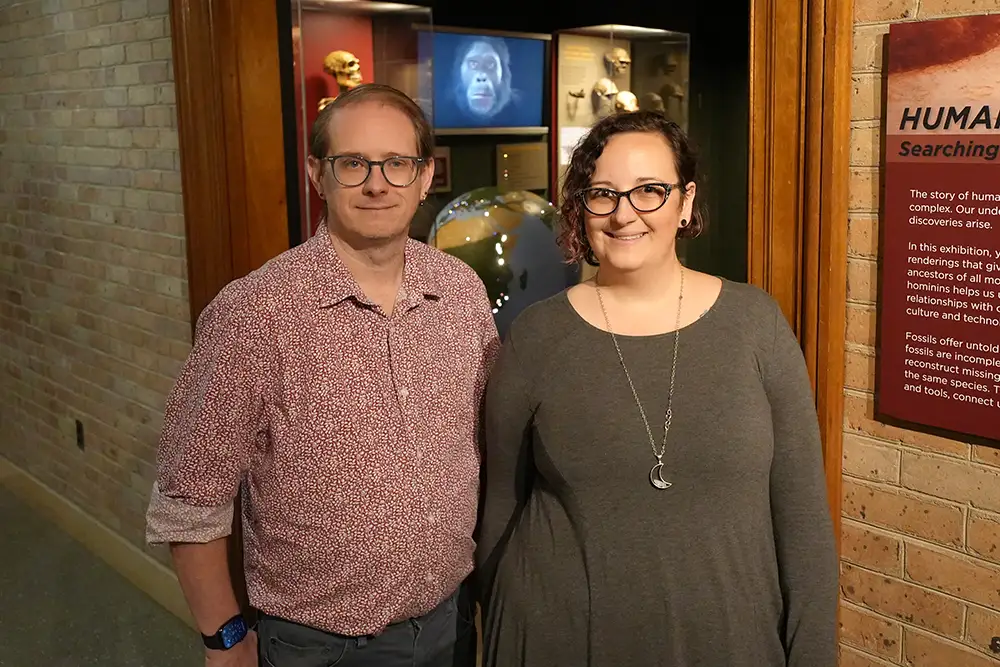
Assistant Professor Steven Lautzenheiser and student Mae Manis.

Student-Faculty Collaboration Refreshes McClung Exhibit


Posted: October 30, 2025Filed Under: Featured, News

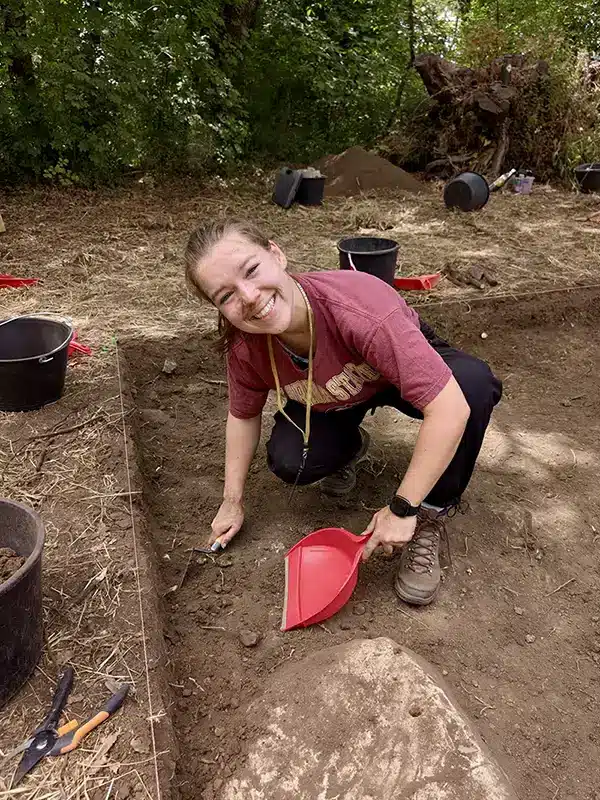
Anna Catherine Gibbs, a UT doctoral student in Mediterranean archaeology, does fieldwork at the San Giuliano Archaeological Research Project.

UT Scholar Part of Rare Etruscan Tomb Discovery


Posted: October 22, 2025Filed Under: Featured, News

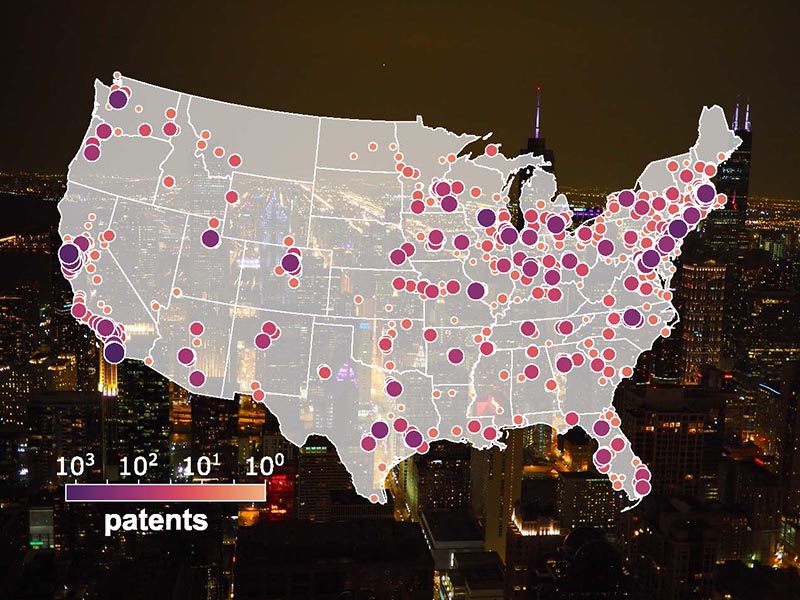
A map of the United States that depicts city sizes

Good Research Neighbors: Measuring Innovation in Urban Areas


Posted: September 15, 2025Filed Under: Featured, News

Headshot of Ehsan Lor Afshar

Scholar Spotlight: Ehsan Lor Afshar


Posted: September 10, 2025Filed Under: Featured, News

Honor killings: Arsalan Khan interviewed by Le Monde

Honor Killings: Arsalan Khan interviewed by Le Monde

Arsalan Khan was interviewed by Le Monde, France, to share his insights into the social, historical and religious factors behind recent honor killings in Pakistan.

Excerpts:

Arsalan Khan, an associate professor of anthropology specializing in religion, gender, and violence in Pakistan at the University of Tennessee, analyzes virality as a double-edged sword: “The government acts when there is a huge scandal and pressure from civil society, urban groups, and human rights organizations, and when something becomes international.”

On the other hand, “documenting crime or punishment through video is part of the process of restoring honor within tribes; it is proof of honor saved for families.” According to him, in the case of the video of the murder of Bano Bibi Satakzai and Ehsan Ullah Samalani, “it is clear that the video was produced for internal purposes. It is quite possible that it was to build evidence to ‘restore honor.'”

Honor killings highlight the lack of regulation of jirgas, traditional tribal councils, which are responsible for extrajudicial decisions that perpetuate patriarchal values ​​in Pakistan’s provinces. “Tribal organizations are organized around the idea of ​​male descent, hence the desire to control women’s sexuality in order to preserve tribal unity,” explains Arsalan Khan.

For Arsalan Khan, the colonial period also played a key role in maintaining jirgas and perpetuating honor killings. According to him, the British regime strengthened these informal courts through its use of indirect rule, “a set of laws and policies that supported local authorities and involved a process of formalizing customary law in the 19th century.” “Jirgas still remain instruments through which the state is able to govern rural areas through them,” the researcher explains.

Read the full article


Posted: September 4, 2025Filed Under: Cultural News, News

  • 1
  • 2
  • 3
  • …
  • 7
  • Next Page »

Recent Posts

  • Welcome to our new Department Head!
  • Why are our fingers different lengths?
  • Alex Bentley in ‘The Conversation:’ Will AI accelerate or undermine the way humans have always innovated?
  • Scholar Spotlight: Yangseung Jeong
  • Steven Lautzenheiser in ‘The Conversation:’ Why can’t I wiggle my toes one at a time, like my fingers?

Recent Comments

No comments to show.

Exploring the human experience.

Careers

Newsletter

Giving

Anthropology

College of Arts and Sciences

502 Strong Hall
1621 Cumberland Avenue
Knoxville, TN 37996-1525
+1 (865) 974-4408
anthropology@utk.edu


Facebook Icon    X Icon    Instagram Icon    YouTube Icon

The University of Tennessee, Knoxville
Knoxville, Tennessee 37996
865-974-1000

The flagship campus of the University of Tennessee System and partner in the Tennessee Transfer Pathway.

ADA Privacy Safety Title IX