• Request Info
  • Visit
  • Apply
  • Give
  • Request Info
  • Visit
  • Apply
  • Give

Search

A-Z Index Map

Anthropology

  • About
  • People
  • Undergraduate
  • Graduate
    • Degree Programs
    • Apply
    • DDHR Graduate Certificate
    • Graduate Handbook
    • Graduate Forms
    • Awards and Scholarships
    • Graduate Student Association
  • Visiting Lecture Series
  • Forensic Anthropology Center
  • Giving
topography background

News

News

Amy Z. Mundorff

Faculty News and Updates

David Anderson
Anderson
Alex Bentley
Bentley
Graciela Cabana
Cabana
Joanne Devlin
Devlin
Barbara Heath
Heath

Professor David Anderson was recently appointed to the National Park System Advisory Board National Historic Landmarks Committee. The committee consists of nationally recognized scholars and experts in history, archeology, architectural history, preservation, and cultural resource management. Anderson will serve on the committee from 2020 to 2024.

In collaboration with Professor Nina Fefferman of the Departments of Ecology and Evolutionary Biology and Mathematics, Professor Alex Bentley also received a RAPID grant from the National Science Foundation titled “Modeling coupled social and epidemiological networks that determine the success of behavioral interventions on limiting COVID-19 spread.” The grant will allow them to develop practical tools (models) that predict the interaction between collective behavior and the dynamics of disease spread across time and space. Understanding what drives collective behavior, which may require different incentives and nudges to help prevent disease transmission, will allow for more effective public health messaging.

Associate Professor Graciela Cabana was part of a research team whose work on the relationship between migration and marine adaptations in South Patagonia appeared in Nature Communications in the summer of 2020.

Distinguished Lecturer Joanne Devlin was a 2019 recipient of the College of Arts and Sciences Advising Award for her outstanding work in undergraduate advising.

Professor Barbara Heath began a two-year term as president of the Society for Historical Archaeology, the largest, international scholarly society for the archaeological study of the modern world, in January 2020.


Kandace Hollenbach
Hollenbach
Ellen Lofaro
Lofaro
Megan Kleeschulte
Kleeschulte
De Ann Pendry
Pendry
Jan Simek
Simek

Assistant Professor Kandace Hollenbach began a two-year term as president of the Tennessee Council for Professional Archaeology in 2020 and was recently elected as president-elect to the Southeastern Archaeological Conference (2020-2022).

Professors Heath and Hollenbach have been awarded a multi-year grant to examine the relationships between people and plants in the diet and practices relating to food (foodways), economy, and ecology of the colonial Chesapeake region from 1630 to 1730. The project is the first comparative study of its kind, and includes samples from 17 archaeological sites in Virginia and Maryland.

Ellen Lofaro has been promoted to be the director of repatriation at UT. Lofaro’s new position is in the Office of the Provost, but she still allocates a portion of her position to curation and collections for the department.

Lofaro, doctoral student Megan Kleeschulte, and Bruce Anderson received a National Institute of Justice grant titled “Implementing NAGPRA: Connecting Medical Examiner and Coroner Offices to Tribal Partners,” in 2019. The work funded by the grant will comprise a large part of Megan’s doctoral research.

Distinguished Lecturer De Ann Pendry received the Vera E. Campbell Advanced Seminar Series grant from The School for Advanced Research (SAR) in Santa Fe, New Mexico, with Irma Velásquez Nimatuj, a Maya K’iche’ anthropologist, journalist, and activist from Guatemala, who is a visiting professor at Stanford University. They will host a seminar titled Indigenous Women’s Proposals to Address the Root Causes of Migration. Together with other seminar participants, they will discuss practical strategies for improving the economic prosperity, health, and well-being of indigenous women and their families in Guatemala with the goals of reducing poverty and emigration from indigenous communities and providing opportunities to develop local capacities and creativity. Originally scheduled for June 2020, the seminar was delayed because of COVID-19 travel restrictions.

Professor Jan Simek, doctoral student Beau Carroll, and colleagues received the Patty Jo Watson Award from the Southeastern Archaeological Conference. Their article “Talking Stones: Cherokee Syllabary in Manitou Cave, Alabama,” published in Antiquity, won the award for 2020, given for the best article or chapter on Southeastern archaeology each year. Simek, colleague Stephen Alvarez of the Ancient Art Archive, and the Chickasaw Nation of Oklahoma were awarded the 2020 Native American Speaker’s Commendation, given to a specific tribal consultation meeting by the SEAC Native American Council. The award recognizes Simek and Alvarez’s visit to the Chickasaw Nation to report on their documentation of Foxtrap Rockshelter in Alabama under two contracts with the Tribe.
Beau Carroll
Carroll
Tamar Shirinian
Shirinian
Dawnie Steadman
Kleeschulte
Amy Mundorff
Pendry
Giovanna Vidoli
Simek

Post-doctoral Fellow Tamar Shirinian was featured as an author interviewee in the journal PoLAR (Political and Legal Anthropology Review) for her article “Fakeness: Digital Inauthenticity and Emergent Political Tactics in Armenia.”

The American Academy of Forensic Sciences elected Professor Dawnie Steadman as chair of the Humanitarian and Human Rights Center (HHRRC) in February 2020.The West Virginia University Biometrics Center of Excellence awarded her a grant for “Longitudinal Study of the Postmortem Variability of Biometric Indicators III.”

Steadman and Associate Professor Amy Mundorff also received a grant from the Defense Advanced Research Projects Agency for “SPOT: Signatures in Plants Over Targets” in collaboration with C. Neal Stewart, Scott Lenaghan, and Jennifer DeBruyn (see FAC News).

Steadman and Research Associate Professor Giovanna Vidoli received a grant from the International Committee of the Red Cross for “Efficacy and Durability of the Better Body Bag: Outdoor Longitudinal Testing at the Anthropological Research Facility.”

Research Associate Professor Giovanna Vidoli and Distinguished Lecturer Joanne Devlin received a grant from the National Institute for Justice for “Identification of Blunt Force Traumatic Fractures in Burned Bone” (see FAC News).

Jan Simek received an award from the Noyes Family Foundation in support of Cave Archaeology research.

Simek was elected Chief Scientist by the Southeast Cave Conservancy, Inc. This is a two-year unpaid position. The SCCI is the world’s largest land conservancy devoted to protecting caves and undertaking research into cave environments.

Recent Faculty Books

  • Simek, J.F., E.E. Pritchard, J. Loubser, S.M. Bow. 2021. The Cosmos Revealed: Precontact Mississippian Rock Art at Painted Bluff, Alabama. Tuscaloosa, AL: University of Alabama Press.
  • Stone Linda, Barbara J. Heath, and Patricia Samford, 2020. Artifacts that Enlighten, The Ordinary and the Unexpected. The Society for Historical Archaeology.
  • Wall-Scheffler, Cara. M., Helen K. Kurki, and Benjamin M. Auerbach, 2020. The Evolutionary Biology of the Human Pelvis: An Integrative Approach. Cambridge: Cambridge University Press.
  • Carol Diaz-Granados, Jan F. Simek, George Sabo, and Mark J. Wagner, 2018. Transforming the Landscape Rock Art and the Mississippian Cosmos. Oxford, UK: Oxbow Press.
Posted: January 20, 2021Filed Under: News

Kamar Afra

Student Awards and Accolades

Kamar Afra
Afra
Armando Anzellini
Anzellini
Hera Jay Brown
Brown
Alex Emmons
Emmons
Angela Mallard
Mallard
Clare Remy
Remy
Rebecca Webster
Webster

Doctoral student Kamar Afra received a Forensic Sciences Foundation Emerging Forensic Scientist Award from the American Academy of Forensic Sciences in 2020 for her paper “Craniometrics vs. Single Nucleotide Polymorphism (SNP)s: Is There a Correlation?”

Doctoral student Armando Anzellini is one of six grantees to receive the Forensic Sciences Foundation (FSF) Lucas Grant for 2020-2021. Anzellini, working with his advisor Professor Dawnie Steadman, will conduct research titled: “Exploring intra-skeletal variation in stable isotope analysis through non-destructive approaches: Applications of the patterns of skeletal remodeling to forensic contexts.”

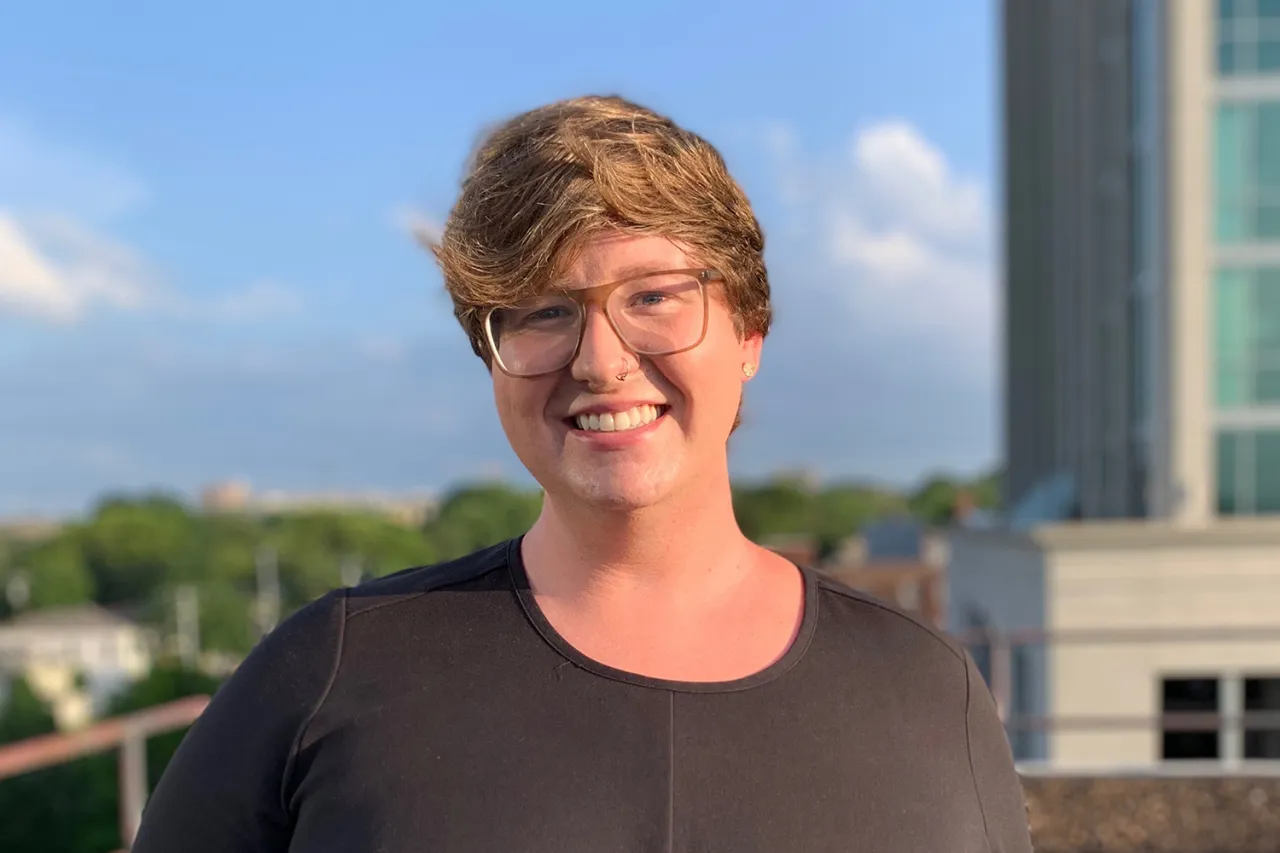
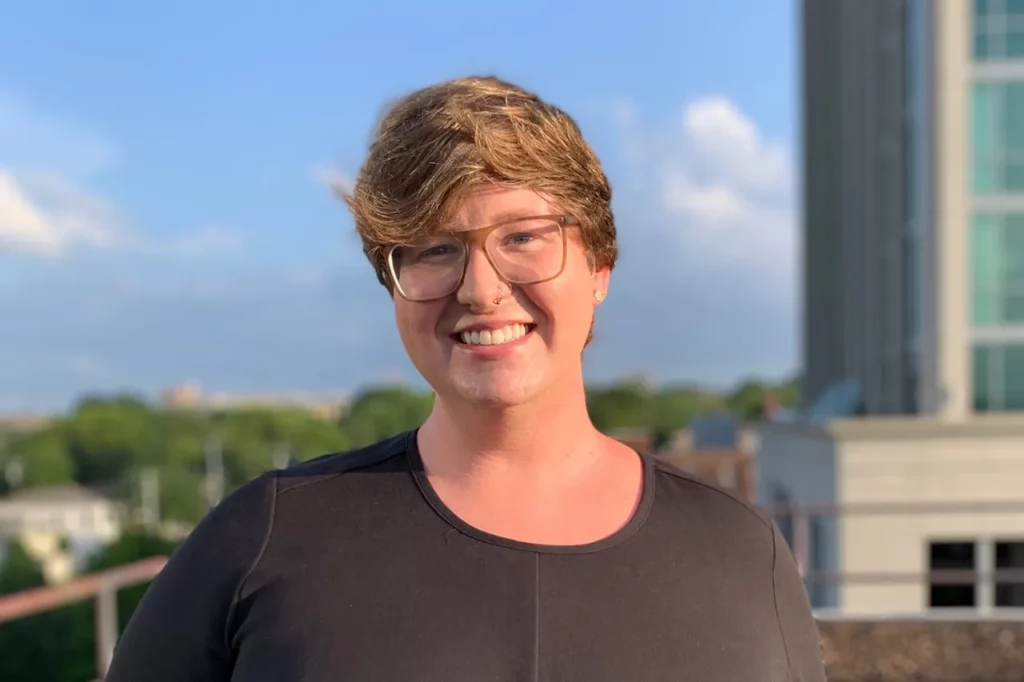
Hera Jay Brown, a 2018 UT graduate and anthropology major, has been named a 2020 Rhodes Scholar. A native of Corryton, Tennessee, she began study at the University of Oxford in England this fall. She plans to complete graduate work in migration studies there before pursuing a law degree in the United States. Brown is the first transgender woman to be elected to a Rhodes Scholarship, and the ninth current or former UT student to earn this prestigious honor.

Alexandra Emmons, a 2019 graduate of UT, received an Early Career Grant from the National Geographic Society for Reconstructing the Past: Using Paleo-Soils to Understand Paleoecological Changes from the Middle to Upper Paleolithic in 2019 along with Associate Professor Graciela Cabana.

Doctoral student Angela Mallard, supervised by Associate Professor Ben Auerbach, received a National Science Foundation Doctoral Dissertation Research Improvement Grant for her project “Assessing Multiple Lines of Evidence for Gene Flow in Archaeological Contexts.”

Clare Remy, a junior from Tucson, Arizona, majoring in anthropology with a minor in biology, was one of five recipients of at UT of a Goldwater Scholarship in 2020. The scholarships are awarded to outstanding college sophomores and juniors who are pursuing advanced study in mathematics, the natural sciences, or engineering. Remy’s research focuses on cystic fibrosis manifestations on the human skeleton informs her senior thesis on the Koch historical cemetery in Saint Louis, Missouri. Professors Amy Mundorff and Ben Auerbach are working with her on this project.

Doctoral student Rebecca Webster and Professor Barbara Heath received a 2020 grant from the Virginia Department of Historic Resources, Threatened Sites Fund. The grant funds archaeological work along the banks of Boathouse Pond on Virginia’s Northern Neck, an area threatened by significant erosion associated with geological subsidence and sea level rise. Webster was also the recipient of the Society for Bead Researchers’ Student Conference Travel Award in 2020. Her paper, “Peake, Wampum, or Sewant?: An Analysis of Shell Bead Terminology in the Seventeenth Century Chesapeake,” was the runner-up in the Jamie Chad Brandon Student Paper Competition at the annual meeting of the Society for Historical and Underwater Archaeology in Boston. She also was awarded the Gloria S. King Fellowship in 2019 to study indigenous pottery and pipes at the Maryland Archaeological Conservation Laboratory.


Posted: January 20, 2021Filed Under: News

Tamar Shirinian

Welcome New Post Docs

Tamar Shirinian

Tamar Shirinian received her PhD from Duke University in 2016 and completed a postdoctoral appointment at Milsaps College before coming to UT. Shirinian’s research focuses on social movements and revolutions, environmental anthropology, feminist and queer anthropology, transnationalism, and psychological anthropology. Her current work examines diversity, inclusion, exclusion, and difference within the context of disasters and conflict, with a more recent focus on institutional logics. She looks at how ethnic, racial, and sexual differences affect access to mental health care and how the health care system is structured. Shirinian is working with Research Librarian Donna Braquet and others to collect, preserve, and share oral histories of LGBTQ+ people who live, or have lived, in East Tennessee.

Roger Begrich

Roger Begrich holds a PhD in anthropology from Johns Hopkins University. Much of his ethnographic work has been conducted in India. He engages global concerns relating to medical and political anthropology, critical legal studies, and Indigenous/Native Studies. Begrich’s work combines an ethnographic analysis of the relations between indigeneity and sovereignty with a comparative discussion of substance use among marginalized populations. His work in India examines the effects of global racial capitalism and (internal) settler colonialism on tribal displacement. Begrich also researches global aging and the use of multiple medications among individuals in aging populations. He has begun research in India on how bodies and selves, as well as social relations, are increasingly mediated by pharmaceuticals and neoliberal forms of elderly care.

Simon Carrignon

Simon Carrignon joined the department as a postdoctoral research fellow in 2019. He received his PhD in 2019 from the Universitat Pompeu Fabra in Barcelona, Spain. He specializes in building computer models that help us to understand how social interactions between individuals and groups can impact global changes. Carrignon has worked with archaeologists, historians, biologists, psychologists, and ecologists. He is currently working with Alex Bentley, professor of anthropology, on social interactions at the age of online social media. He is also working with Bentley and Nina Fefferman, professor in the Department of Ecology and Evolutionary Biology, on understanding how the spread of socially acquired behaviors can impact the spread of COVID-19. This work can also be used to explore the impact of viruses and other disease-causing agents on the evolution of ancient human societies at larger scales. While at UT, he has also been working outside of the department with epidemiologists and researchers in information science.

Charity Owings

The Forensic Anthropology Center welcomed our new Haslam postdoctoral fellow, Charity Owings, who is a forensic entomologist. She earned a PhD in biology from Indiana University-Purdue University Indianapolis. Owings is currently characterizing the insect biodiversity at the Anthropology Research Facility, and her overall research aims to refine time since death estimations using various arthropods. She grew up reading Professor Bass’s books and always dreamed of working at the body farm one day. Now that dream has come true, she could not be happier and more at home in the anthropology department.


Posted: January 20, 2021Filed Under: News

Hera Jay Brown

DDHR Graduate Hera Jay Brown Is Named Rhodes Scholar

Hera Jay Brown

The faculty of the Disasters, Displacement and Human Rights Program (DDHR) would like to honor and celebrate our remarkable student, Hera Jay Brown, who was named a 2020 Rhodes Scholar on November 23, 2019. She is the first transgender woman to be named a Rhodes Scholar and the ninth graduate in the history of the University of Tennessee to win this prestigious honor to study at Oxford University.

Hera was drawn to the DDHR program in Anthropology to focus her interdisciplinary major in sociocultural anthropology and forced migration studies, where she was carefully mentored by DDHR director Dr. Tricia Hepner and further guided by Dr. Rebecca Klenk and Dr. Raja Swamy. At Oxford, Hera Jay plans to work at the intersections of sociocultural anthropology, forced migration, law and public policy, and the critical study of humanitarianism.  

Hera Jay’s scholarly interest in refugees, and her commitments to social justice and human rights, motivated her work at home and abroad. At UT, she served on the executive board of a campus sexual empowerment and awareness group (SEAT) and as the LGBTQ+ Policy Intern at the Biden Foundation in Washington DC. During two years of study abroad in Amman, Jordan, she carried out original fieldwork in the King Hussein bin Talal Development Area, a special work zone established for refugees from Syria. In Berlin, Germany, she was a volunteer translator and cultural advisor for a community organization serving Syrian refugees and asylum seekers, and became an intern with the Middle East Collective (founded and directed by UT alumna Whitney Buchanan). Following graduation she took a fellowship at American University in Cairo as a Presidential Associate, and then returned to the US to work in Nashville, Tennessee as a refugee youth coordinator. She is currently a Fulbright-Schuman Research Fellow in the European Union, where she is studying the EU’s “golden passport” and citizenship-by-investment schemes within the broader context of EU refugee and migration policy. Her project includes research sites in Malta, Belgium, Bulgaria, Cyprus and Lithuania. 

With respect to her training at UT, Hera writes, “As an undergraduate, finding the right mixture of support and opportunity in a program is vital; I could not have made a better choice than the DDHR program. It led to my fieldwork experiences with refugee communities in Berlin, Amman, and Cairo. Now, as a Fulbright-Schuman researcher in the EU, I find myself continuing to draw from these deep, instilled wells of knowledge, support, and experience provided by the DDHR program and its faculty.”

Read more about Hera Jay here:

The Guardian: https://www.theguardian.com/education/2019/nov/24/first-transgender-rhodes-scholar-2020-class

 New York Times: https://www.nytimes.com/aponline/2019/11/24/us/ap-us-rhodes-scholars.html

 NBC News: https://www.nbcnews.com/feature/nbc-out/trans-woman-first-rhodes-scholar-program-s-117-year-history-n1090866

 UTK Campus News: https://news.utk.edu/2019/11/25/hera-jay-brown-is-uts-ninth-rhodes-scholar/  


Posted: December 3, 2019Filed Under: DDHR-News, News

  • « Previous Page
  • 1
  • …
  • 5
  • 6
  • 7

Recent Posts

  • Welcome to our new Department Head!
  • Why are our fingers different lengths?
  • Alex Bentley in ‘The Conversation:’ Will AI accelerate or undermine the way humans have always innovated?
  • Scholar Spotlight: Yangseung Jeong
  • Steven Lautzenheiser in ‘The Conversation:’ Why can’t I wiggle my toes one at a time, like my fingers?

Recent Comments

No comments to show.

Exploring the human experience.

Careers

Newsletter

Giving

Anthropology

College of Arts and Sciences

502 Strong Hall
1621 Cumberland Avenue
Knoxville, TN 37996-1525
+1 (865) 974-4408
anthropology@utk.edu


Facebook Icon    X Icon    Instagram Icon    YouTube Icon

The University of Tennessee, Knoxville
Knoxville, Tennessee 37996
865-974-1000

The flagship campus of the University of Tennessee System and partner in the Tennessee Transfer Pathway.

ADA Privacy Safety Title IX