


The Conversation: ‘Russia’s invasion united different parts of Ukraine against a common enemy – 3 years on, that unanimity still holds’

When Russia invaded Ukraine in the spring of 2022, President Vladimir Putin incorrectly assumed it would be a swift takeover.
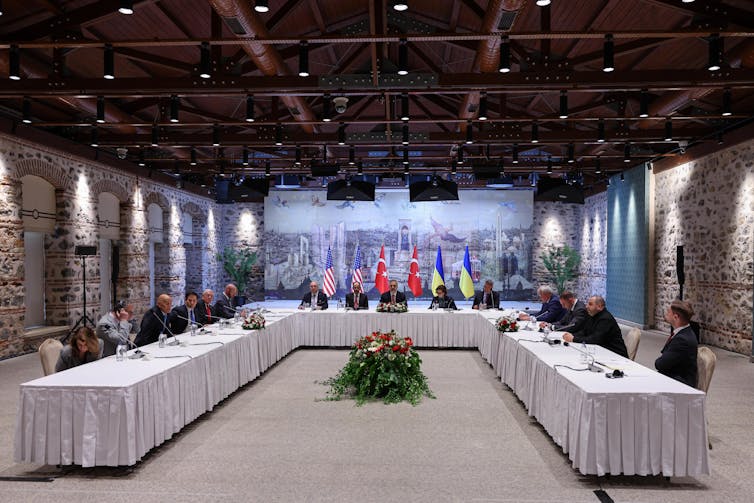
In fact, three years on, negotiators from both countries are tentatively exploring the idea of a negotiated way out of a largely stalemated conflict.
So what did the Kremlin’s initial assessment get wrong? Aside from underestimating the vulnerabilities of Russia’s military, analysts have suggested that Moscow also miscalculated the support Russia would receive from Ukrainians in the country’s east who have close ethnic ties to Russia.
Our recently published study on Ukrainian sentiment toward Russia before and after the invasion backs up that assertion. It demonstrates that even those Ukrainians who had close ties to Russia based on ethnicity, language, religion or location dramatically changed allegiances immediately following the invasion. For example, just prior to the invasion of 2022, native Russian speakers in Ukraine’s east tended to blame the West for tensions with Russia. But immediately after the invasion, they blamed Moscow in roughly the same numbers as non-Russian-speaking Ukrainians.
Moreover, this shift was not just a short-lived reaction. Three years after the invasion, we followed up on our survey and found that Ukrainians still blame Russia for tensions to a degree that was never so unanimous before 2022.
A natural experiment
Our study is part of a larger project exploring how effective Russian propaganda has been at influencing Russian-speaking adults in certain former Soviet states. Our inaugural survey was launched in the fall of 2020, while the question regarding tensions between Ukraine and Russia was first posed in February 2022, immediately prior to Russia’s invasion of Ukraine.
Surveys were completed by over 1,000 Russian-speaking people in Ukraine − excluding Crimea and the breakaway Donbas region for security reasons − and in Belarus. While the spring surveys in Ukraine were conducted in person, the others were done by telephone due to the political situation in each country.
Belarus was chosen because it shares a similar historical, linguistic and ethnic background to Ukraine, but the two nations have diverged in their geopolitical paths. Shortly after the fall of the Soviet Union in 1991, Belarus, like Ukraine, forged ahead in attempting to build democratic systems. But after Belarusian President Alexander Lukashenko came to power in 1994, the country become an authoritarian state with a high dependence on Russia for political and economic support.
In broad terms, Ukraine has had an opposite trajectory. Relations between Ukraine and Russia fluctuated over the initial years of independence. But since the Maidan revolution of November 2013 to February 2014, a staunch pro-Western leadership has emerged.
Still, certain segments of the population in Ukraine continued to hold affinities toward Russia – most notably, the Russian-speaking older generation in the country’s east.
Our surveys provide a kind of natural experiment looking at the impact of a Russian invasion on previous pro-Russian public sentiment.
Ukraine serves as the “treatment” group and Belarus as a “quasi-control” group, with the distinguishing factor being a Russian invasion. The questions we asked: “Who do you think is responsible for the worsening tensions between Russia and Ukraine?” and “In general, how do Russian policies affect your country?”
Converging blame
We found that in Ukraine, but not in Belarus, geopolitical views were sharply unified by the experience of the invasion. On one level, this is not surprising – after all, the people of a country being invaded would be expected to hold some degree of resentment to the invading army.
But what we found most interesting is that this effect in Ukraine massively overrode the split among various identities before the invasion. This was most prominent in people’s perceptions of who was to blame for rising tensions.
Prior to the invasion, 69.7% of respondents in Ukraine overall blamed Russia for the tensions between the two countries, with 30.3% blaming NATO, Ukraine or the U.S. By August 2022, 97.3% of respondents in Ukraine blamed Russia for the tensions, with only 2.7% blaming NATO, Ukraine or the U.S.
By comparison, in the neighboring country of Belarus, 15.5% of respondents blamed Russia for the tensions prior to the invasion, and only 21.9% of respondents blamed Russia for the tensions after the invasion.
This near unanimity in Ukraine masks the massive shifts you see when broken down for demographic differences. For example, blame varied widely across regions of Ukraine before the invasion but converged after the invasion. Prior to the invasion, only 36.0% of respondents in the east of Ukraine and 51.4% of respondents in the south of Ukraine blamed Russia for the tensions. After the invasion, over 96% of respondents in both regions blamed Russia.
A similar effect can be seen across other demographic differences. Only 30.6% of Catholics in Ukraine blamed Russia for the tensions prior to the invasion, while 83.0% blamed Russia later on.
What were once stratified opinions before the invasion became uniform afterward.
To check that this trend was not just an immediate post-invasion blip, we conducted the surveys again in September 2024 and February 2025. The overall proportion of Ukrainians who blamed Russia for the tensions remained high, with 85.7% and 84.5%, respectively. And again, these results held across the various demographic breakdowns.
In February 2025, the most recent survey, 77.2% of respondents in the east of Ukraine and 83.0% of respondents in the south blamed Russia. Catholics across Ukraine continued to blame Russia, with 90.7% in September 2024 and 90.6% in February 2025. Overall, there has been a small drop in the percentages of those blaming Russia – with war fatigue a possible reason.
Consequences for peace
Our findings suggest that in times of collective threat, divisions within a society tend to fade as people come together to face a common enemy.
And that could have huge consequences now, as various parties, including the U.S., look at peace proposals to end the Russia-Ukraine war. Among the options being explored is a scenario in which the current front lines are frozen.
This would entail recognizing the Russian-occupied territory of Crimea and the separatist regions of Donetsk and Luhansk as part of Russia. But it would also effectively relinquish Ukraine’s southeastern provinces of Kherson and Zaporizhzhia to Russia.
While our surveys cannot speak to how this will go down among the people of Crimea, Donetsk and Luhansk, the study did include Kherson and Zaporizhzhia. And our findings show that the sense of Ukrainian identity strengthened even among Russian-speaking people in those areas.
Ben Horne, Assistant Professor in the School of Information Sciences, University of Tennessee; Catherine Luther, Professor of Journalism & Media, University of Tennessee, and R. Alexander Bentley, Professor of Anthropology, University of Tennessee
This article is republished from The Conversation under a Creative Commons license. Read the original article.

The Conversation: ‘COVID modelling reveals new insights into ancient social distancing – podcast’
Five years since COVID emerged, not only has the pandemic affected the way we live and work, it’s also influencing the way researchers are thinking about the past.
In this episode of The Conversation Weekly podcast, archaeologist Alex Bentley explains how the pandemic has sparked new research into how disease may have affected ancient civilisations, and the clues this offers about a change in the way humans designed their villages and cities 8,000 years ago.
As an anthropologist and archaeologist at the University of Tennessee, Alex Bentley usually spend his time studying neolithic farming villages. But in the early days of the pandemic, he decided to team up with an epidemiologist on a research project to model the feedback loops between social behaviour, such as wearing a mask or not and the spread of disease. He says:
In doing that project, we learned so much about the spread of disease and its interaction with different behaviours. It was a perfect setup for looking at the same kind of question in the distant past when diseases were evolving for the first time in dense settlements.
Bentley was particularly interested in whether it could shed light on a conundrum: a curious pattern from the archaeological record that showed that early European farmers lived in large dense villages, then dispersed for centuries, then later formed cities again, which they also abandoned.
All this was happening in the neolithic period, between around 9000BC and 3000BC, a time when humans shifted from a nomadic hunterer-gatherer lifestyle to settling in small tribes in one place, cultivating the land and domesticating animals.
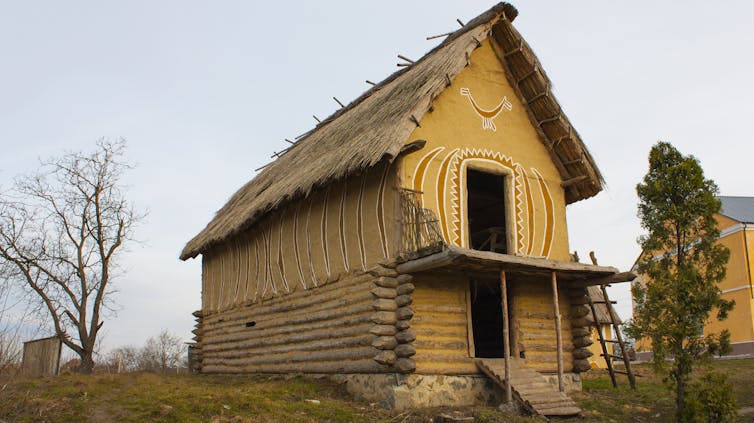
Bentley decided to apply the same model of how disease and patterns of behaviour spread during COVID, to map out how a contagious disease could have spread in an mega settlement called Nebelivka in modern-day Ukraine. This settlement was designed in an oval layout and divided into neighbourhoods, or clusters. Bentley and his colleagues suggest this layout, whether the inhabitants knew it or not, could have helped prevent the spread of disease.
Listen to the full episode of The Conversation Weekly to hear the interview with Alex Bentley.
This episode of The Conversation Weekly was written and produced by Katie Flood and hosted by Gemma Ware. Sound design was by Eloise Stevens and theme music by Neeta Sarl.
Newsclips in this episode from ABC News.
Listen to The Conversation Weekly via any of the apps listed above, download it directly via our RSS feed or find out how else to listen here.
Gemma Ware, Host, The Conversation Weekly Podcast, The Conversation
This article is republished from The Conversation under a Creative Commons license. Read the original article.

Anthropology Master’s Program Ranked in Top 10
Anthropology Master’s Program Ranked in Top 10
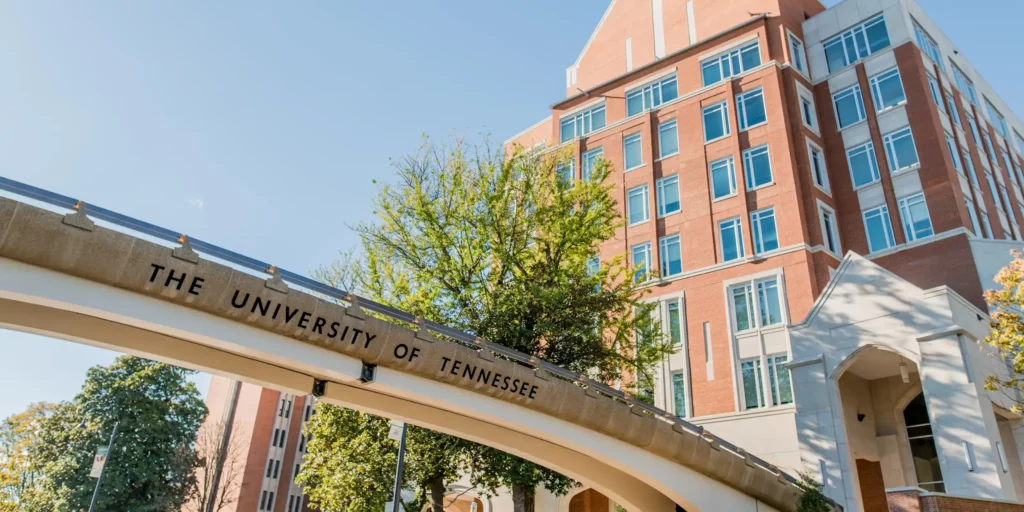
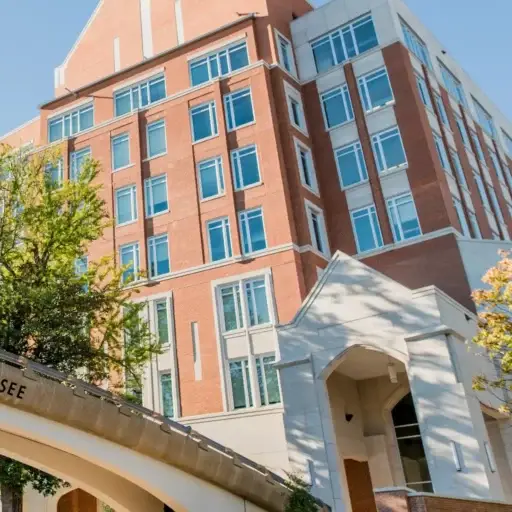
The master’s degree program in anthropology at the University of Tennessee, Knoxville, has been named one of the top 10 in the country by College Factual.
The website ranked colleges and universities based on multiple factors, including educational resources, the caliber of the students, graduation rate, and even average salaries of graduates early in their careers.
“This ranking confirms what we already know: Our anthropology graduate program is among the very best in the discipline,” said Patrick Grzanka, division dean for social sciences in the UT College of Arts and Sciences. “Our exceptional faculty provide world-class training to our outstanding students, who are charting the future of anthropology.”
The Department of Anthropology holds an open house every October for prospective students to meet faculty and staff, speak with graduate students, and tour the state-of-the-art laboratories.
The Master of Arts program offers concentrations in anthropological archaeology, Mediterranean archaeology, biological anthropology, and cultural anthropology.
By Amy Beth Miller
Spring 2024 Newsletter
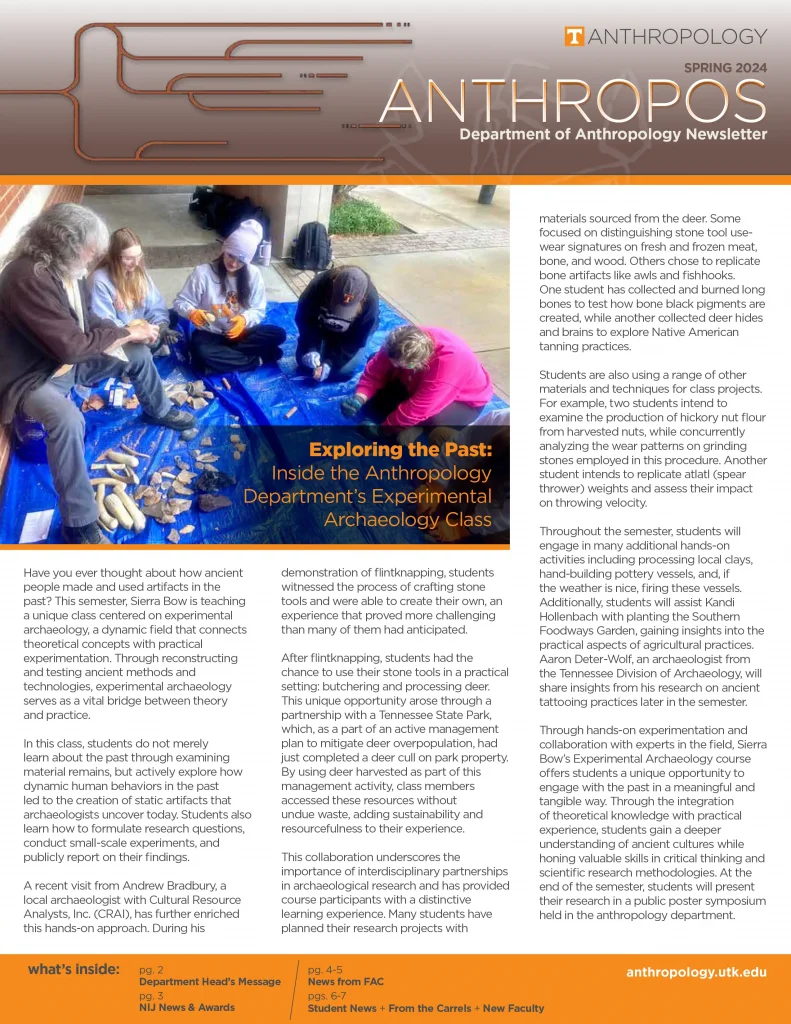
Articles:
- Exploring the Past: Inside Anthropology’s Experimental Archaeology Class
- Message from Department Head Barbara Heath
- From the Carrels
- Student Excellence
- Graduate Students in the News
- National Institute of Justice Director honors Anthropology Faculty with Campus Visit
- News from the Forensic Anthropology Center
- Welcome New Faculty
- Spotlight on Staff

Spotlight on Staff

Anthropology faculty, staff, and students welcomed new administrative assistant Helen Spencer to our department in June. She works closely with students and faculty to facilitate all aspects of the graduate program and undergraduate registration, provides timetable support, and monitors the department’s website. Helen was born in Alabama. When she was four, her family moved to Iran, where her father worked as a supervisor with Sikorsky. She served in the US Coast Guard and received her associate degree in 2011. Spencer plans to continue her education here at UT. She enjoys spending her leisure time with her two daughters, painting, wood working, and walking along the riverbanks of East Tennessee.
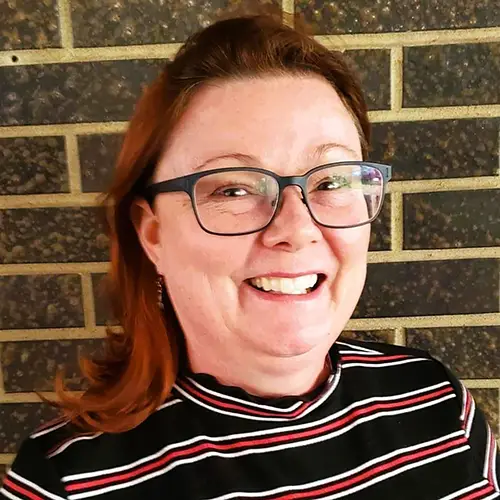
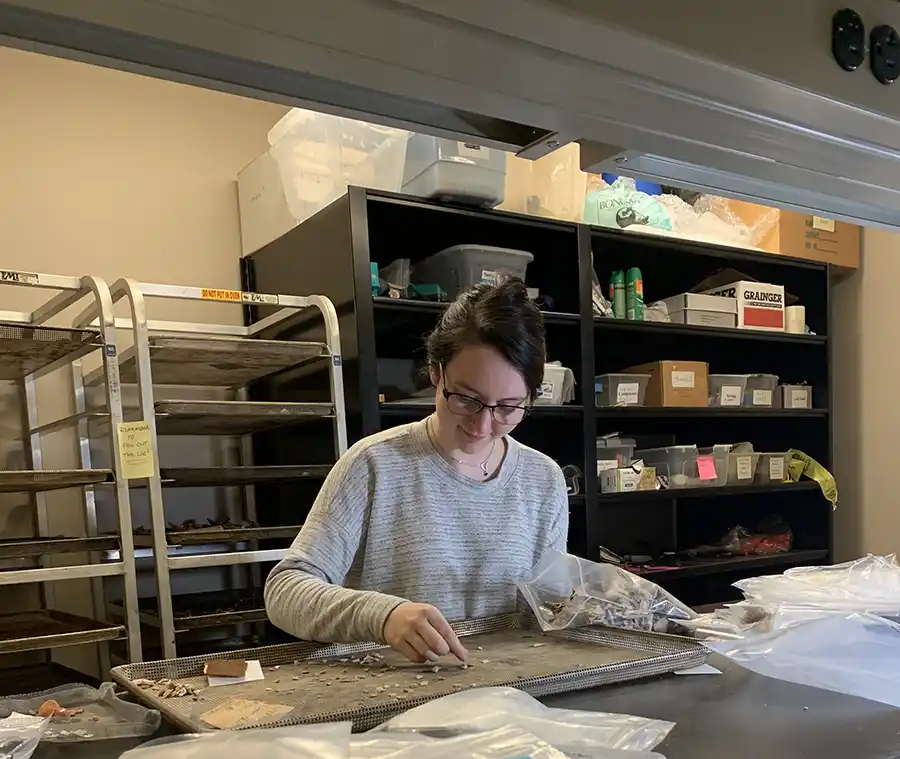
Joey O’Dell joined the department as Archaeological Collections Manager at the archaeology curation facility at Middlebrook Pike in May. She has spent this year consolidating, organizing, and moving equipment to make space for an expanded team working to fulfill our legal and ethical responsibilities under the Native American Graves Protection and Repatriation Act (NAGPRA). The reorganization will also result in a better integration of laboratory and curation spaces.
Over the next few months, O’Dell will work with campus and community partners to focus on preparing collections whose management falls outside of NAGPRA for further academic research and begin updating the archaeological collections database to inform future research and increase the availability of collections for professional and student analyses and community-based exhibits. She is working closely with Ellen Lofaro, Anthropology’s Curator of Collections, and our Curation Committee to develop a set of updated curation policies for the department.
O’Dell holds a bachelor’s degree in anthropology, with a focus in archaeology, and a master’s degree in public history from Middle Tennessee State University (MTSU). As a student, she worked at the Center for Historic Preservation and served as the manager of the Archaeology and Public History Labs at MTSU for three years. She is a founding member of the new Community of Practice for Southeast Curation Care which aims to bring curation professionals together to share information, develop ideas, and create solutions for common collections care challenges.